Just over a half-hour southwest of Madison, amid the rolling green hills of a rural countryside, “America’s Little Switzerland” awaits the likes of visitors far and wide.
What appears to be an unassuming small town quickly becomes more than meets the eye. The blend of wooden chalets with gabled roofs, Fraktur-style fonts painted on businesses and the swinging wooden signs instantly transport you into a quaint Swiss town.
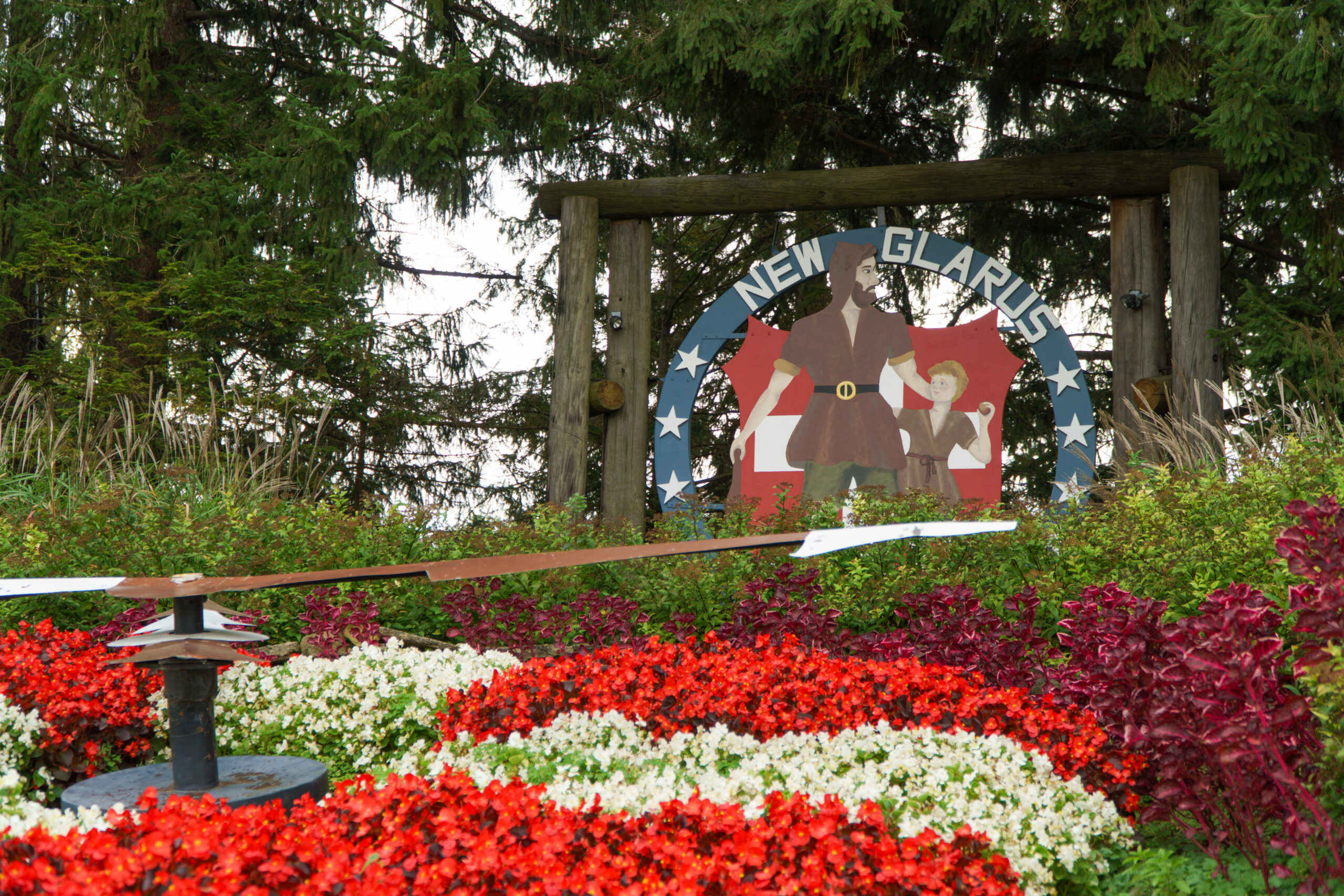
I once drifted along these same streets with my grandparents, watching my papa eat Wiener schnitzel at the Swiss tavern-inspired Glarner Stube restaurant and my grandmother smile keenly at the almond horns and other baked goods beneath a gleaming display at the New Glarus Bakery.
Now, on a cloudy September day, one look at First Street in New Glarus might suggest that nothing has changed at all in the 10 years since I last visited. But even though the nostalgia of these memories remains, I’ve come to learn this town is anything but stagnant in its growth.
Maintaining the historical roots of a Swiss-settled town for nearly 180 years hasn’t been easy, but balancing this culture while adapting to modernity has only just started for the town of New Glarus. Despite setbacks from the COVID-19 pandemic, the town bustles year-round with activities and events set against a picturesque movie-set scene of Swiss architecture, drawing people from all over Wisconsin, Illinois and Switzerland itself. With long-standing businesses and traditions still preserved in this small town, New Glarus is transforming itself with renovations and expansions that will continue to enhance the charm of this small town in southern Wisconsin.
“The village made a conscious decision 60 years ago to really embrace our Swiss heritage.”
New Glarus was born on a mere 1,200 acres of land in 1845, when 131 colonists from the canton of Glarus in Switzerland arrived on the Wisconsin Territory. Within a few years, Wisconsin became formally established as a state, and immigrants from other parts of Switzerland settled in Green County.
The dairy industry took hold in New Glarus as early as 1868 and provided consistent living for locals, with an economic peak around 1915. But by 1962, the Pet Milk Company condensing plant closed down, marking the shift from a dairy-focused economy to a rise of tourism in the area.
“The village made a conscious decision 60 years ago to really embrace our Swiss heritage,” says Bekah Stauffacher, the president of the Swiss Center of North America, located in New Glarus. “Local business owners put Swiss facades on their buildings and they made targeted ad campaigns to bring visitors in to get a slice of Switzerland in Wisconsin.”
One of the pillars created in the town’s early days was the New Glarus Hotel, built in 1853, which still features a Swiss facade. The hotel sits downtown on the corner of First Street and Sixth Avenue in a spot that can’t be missed. The main restaurant shut down in 2021 following the pandemic, and Ticino’s Pizzeria on the first floor closed soon after.
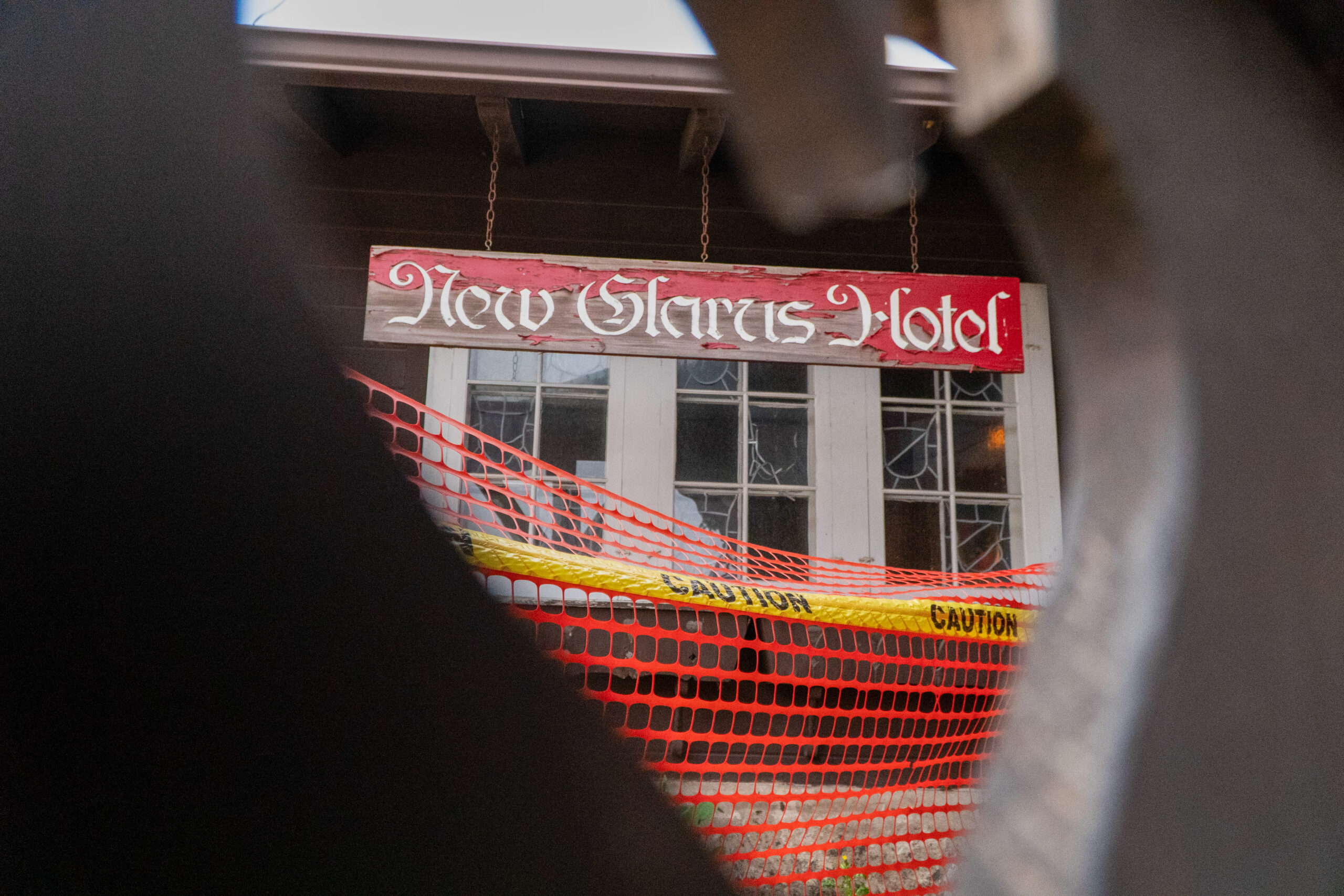
The building remained empty, a time capsule of Swiss heritage waiting to be used again.
Now, a $7 million renovation is underway on the hotel with the help of $1 million in tax-incremental financing from the village, historic tax credits and overwhelming support from locals.

“I would say, the majority, over three-quarters of the business owners downtown have invested in the hotel,” says Steve Landry, a local resident and commercial banker at the Bank of New Glarus. “Everybody believes that that is a corner pillar for our town and will bring people to town.”
The hotel’s white walls and dark wood shutters are now draped in a large banner: “Next Chapter, Coming Soon — New Glarus Hotel and Restaurant.” Caution tape hangs beneath the creaking wooden sign of the hotel — a promise of something new to come.
Stray lightbulbs dangle about with a dim glow and wood planks are haphazardly strewn around the hotel’s dancing room as renovating begins.
“Everyone’s excited to just have it breathe life again and to have it be a part of raising New Glarus and continuing to grow in ways that hopefully benefit everybody,” says Christina Bleifuss, managing member of the New Glarus Hotel Group.
Bleifuss grew up in Monticello, just 10 minutes south of New Glarus. She now lives with her family in New Glarus and is one of the key creative minds behind the renovation of the hotel with Dan Roe, another managing member, as her financial partner on the task. Together, the two tirelessly work as part investors and part workers on rejuvenating this piece of New Glarus’ heritage.
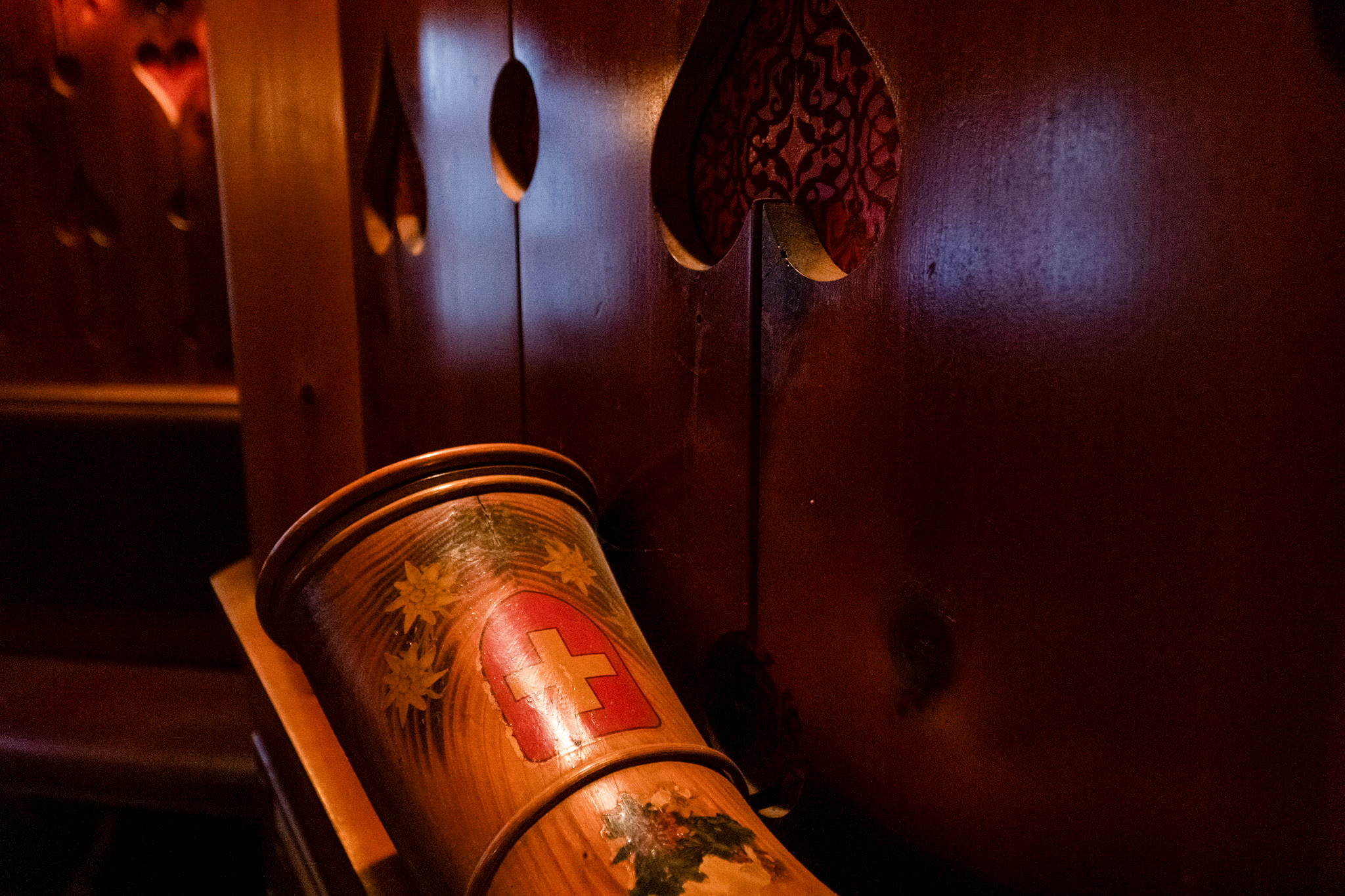
The hotel group has plans for exciting changes to the hotel’s interior, though Bleifuss says the iconic exterior will remain the same, along with many other traditional aspects embedded in rooms like the Yodel Room restaurant. Heart-shaped cutouts in the wooden panels, a massive horn on the wall adorned with a Swiss flag emblem and the stained glass panels lining the warm wooden booths are immediate reminders of Swiss history embedded in the hotel.
While growing up, Bleifuss actually learned how to polka dance when she came to the New Glarus Hotel with her grandfather and family. She witnessed the glory days of Roger Bright, so the impact of revitalizing this room is intertwined with her own memories. With a modern twist, a vinyl wall background and a dance floor will allow all to participate in this traditional polka dance.
Bleifuss hopes for the hotel to host at least one live performance per week, keeping the music and tradition alive.
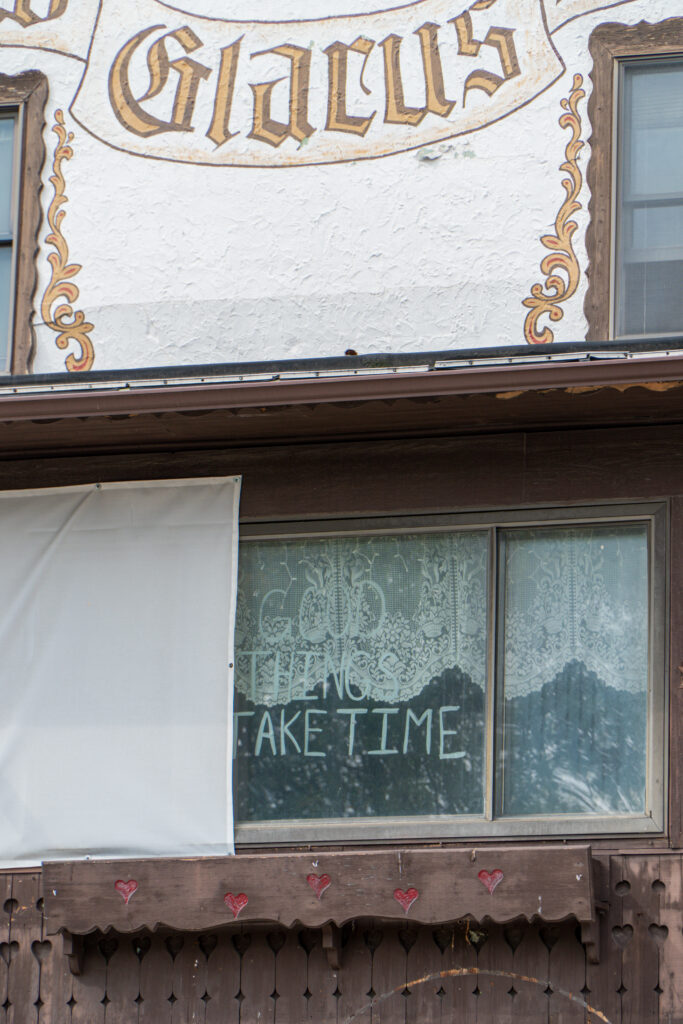
Overall, the renovation of the hotel is expected to bring an anchor of New Glarus’ tourism back to life, and the support has been immense.
“It’s basically a community-owned building at this point because so many local individuals and business owners saw the potential,” Bleifuss says.
The revival of such a monumental building is what keeps the town of nearly 2,300 residents pushing forward, excited to revive the memories of polka dances and cheese fondue in the Yodel Room.
“The New Glarus Hotel, I mean, that’s almost as old as the town itself,” Stauffacher says. “So almost everybody who’s lived here any amount of time has memories of eating, dancing and wedding celebrations there.”
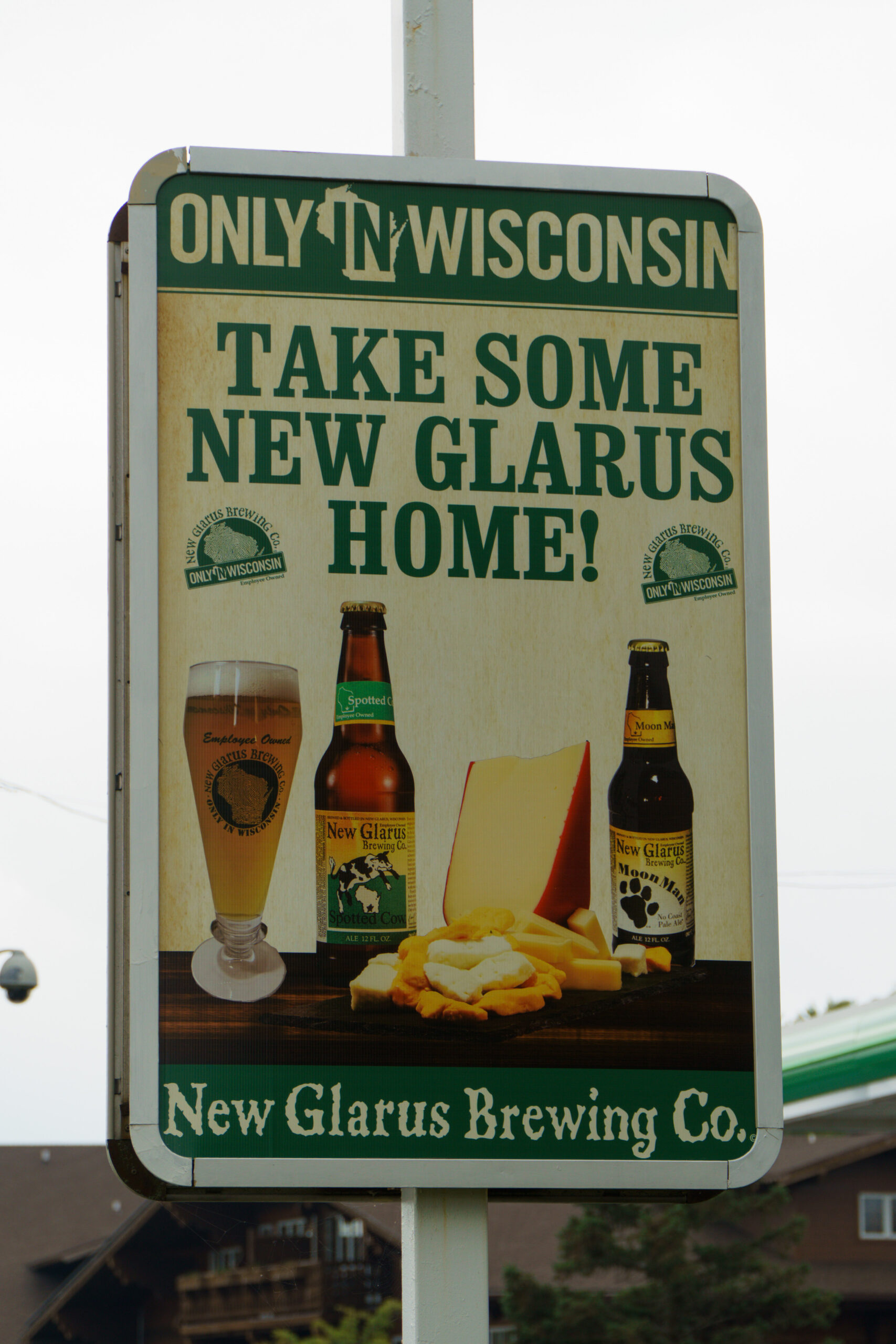
And while some buildings are being restored, others are expanding. The New Glarus Brewing Company, home to the beloved Spotted Cow beer, began a $55 million expansion at its Hilltop facility in October 2024.
“When we originally built our Hilltop brewery in 2007, I never imagined we’d outgrow it in my lifetime, but here we are doing our 10th addition after already quadrupling our original square footage,” founder Deb Carey said in a 2024 press release.
The expansion is expected to double the main brew hall with four additional copper kettles and quadruple the parking space for visitors.
“Obviously, the New Glarus Brewery is incredibly successful and brings a lot of people here as is, but this expansion is just going to bust those doors wide open,” says Kelsey Jenson, village administrator of New Glarus.
“We hope to be both an amenity for people who have already decided to visit New Glarus … and a draw for guests who maybe haven’t spent much time in New Glarus ever.”
The expansion is much anticipated by locals and tourists alike, and it’s just one more testament of how New Glarus, with its more than 2,200 residents, continues to evolve with projects in every pocket of town.
With construction happening in many corners of the town, it’s not lost on New Glarus that its Swiss roots have to remain intact. The village incentivizes business owners every year to maintain the Swiss facades of their buildings, keeping them clean and well-preserved, and the town itself is experiencing a, “boom in Swiss culture and heritage,” says Stauffacher. “We’ve got the festivals and we’ve got museums, but we also have Männerchor, which is a men’s choir that’s been around a long time, and a Jodlerklub … and local teachers who are teaching Swiss flag-throwing.”
In addition to these preserved traditions, tourism will only continue to grow in New Glarus as its residents reimagine another existing space. Married couple Sam Kincaid and Jon Nodler recently opened Canter Inn in a 1900s Queen Anne Victorian home, previously home to a restaurant named Kristi’s, which will be relocating. Both worked in Madison-area restaurants before moving to Philadelphia and opening Cadence, a 38-seat restaurant, with Michael Fry in 2018.
“Local admin have shown that they are driven to propel New Glarus into the future, while still honoring its Swiss heritage, and we are excited to be a part of that,” Kincaid and Nodler said in a statement. “We’re excited to build an identity that grows with and responds to the evolving community of New Glarus.”
The addition of Canter Inn isn’t just great for locals that want to have a new dinner spot; it’s beneficial for the tourism economy as a whole.
“We hope to be both an amenity for people who have already decided to visit New Glarus … and a draw for guests who maybe haven’t spent much time in New Glarus ever, or not recently, so that they might decide to spend their dollars not just on their dinner, but also the hotel or a brewery tour,” Kincaid and Nodler said in that same statement.
And so, with spots both old and new opening their wooden doors and putting a twist on the Swiss scenery, the charm and enticement of New Glarus won’t slow down anytime soon.
“If you’re not growing, you’re dying,” Landry says. “Lucky for the village of New Glarus, we’ve always kind of stayed ahead of that curve.”
A Swiss in Time
This timeline traces how New Glarus has evolved since 1845
Interested in learning more about the rich history of New Glarus? Check out this timeline to see how the Swiss heritage of New Glarus was established, and how it has been preserved today. With such vibrant displays of Swiss culture embedded into the village, New Glarus pays homage to its roots with great pride. Explore the Swiss-settled beginnings of the town in this historical timeline and discover how New Glarus has shaped its unique identity for 180 years.
Feature Photo: The wood interior of the New Glarus Hotel illuminated by the sunlight through the stain glass window. Photo by Josie Cargill