Content warning: This story discusses suicide. If you or someone you know is experiencing suicidal thoughts or emotional distress, help is available 24/7. Please call or text the Suicide & Crisis Lifeline at 988 to be connected with resources.
Before the sun rises, before the coffee brews, before presents are even opened on Christmas morning — the barn comes first.
That’s the unwritten rule on many Wisconsin farms.
But beneath that stoic ethic, the pride, grit and long hours, something quieter has grown in the farming community: depression, burnout, anxiety and, in some cases, deaths by suicide.
Karen Endres still remembers the moment a farmer called her with an update after reaching out for mental health help.
The passing comment — from a son to his father, standing in their barn — stuck with her.
“Dad, you’re laughing and you’re smiling again.”
It was the first farmer Endres helped as the Farmer Wellness Program coordinator at the Wisconsin Department of Agriculture, Trade and Consumer Protection.
The last Endres had spoken with the farmer, he’d told her he felt overwhelmed and stuck. The mental health providers he tried were either unavailable or too entangled in small-town ties. One was even married to the farmer’s own cousin.
So Endres stepped in, sending a short, handpicked list of providers who understood farm life and the isolation, grief and stress that often hide behind grit.
That single sentence from his son became proof that her work matters.
“Please tell farmers that there is hope,” the farmer told Endres.
Farmers are three and a half times more likely to die by suicide than the general population, according to the National Rural Health Association. In Wisconsin — a state proudly known as “America’s Dairyland” — something deeper is shifting. Beneath the surface of daily routines and long-held traditions, farmers, advocates like Endres and support networks across the state are working to open conversations around mental health. Their efforts ripple through rural communities with a clear goal: reduce stigma and bridge gaps in care.
Agriculture makes up 9.5% of Wisconsin’s workforce and contributes more than $116 billion to the state’s economy annually, according to the Wisconsin Department of Agriculture, Trade and Consumer Protection. At the same time, 95% of farms in the state are family-owned, Endres says.
This cultural prominence has shaped a romanticized version of farm life in Wisconsin: red barns, green pastures and cute cows. But the reality, Endres says, is relentless with time pressures and round-the-clock responsibilities.
‘Even big ships need little ships’
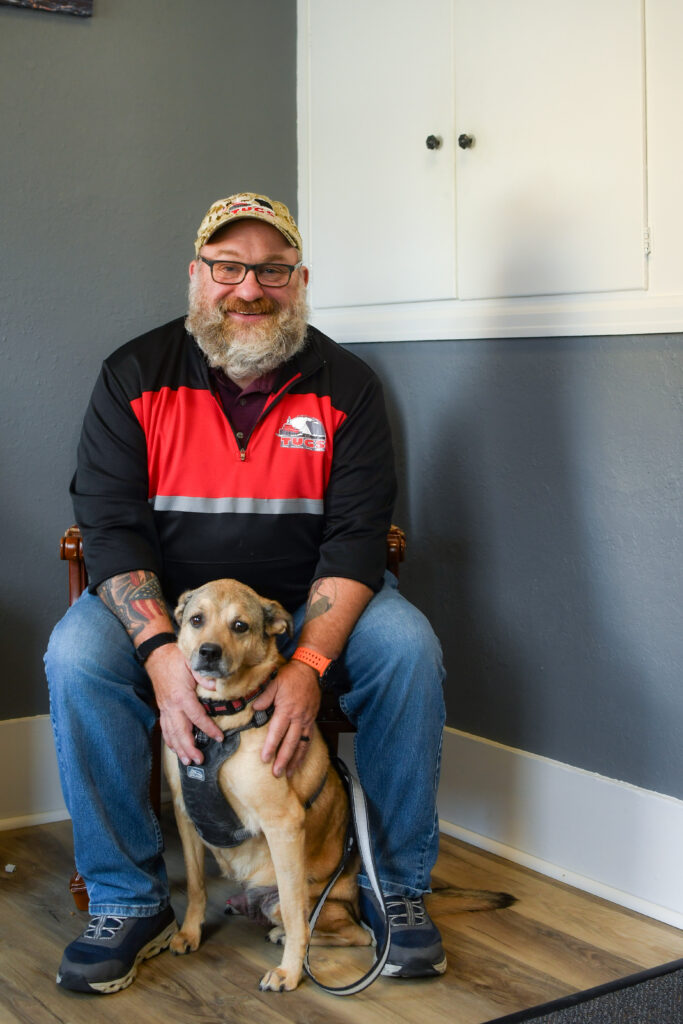
Jeff Ditzenberger, a Navy veteran and lifelong member of the agricultural community, knows the weight of stigma firsthand.
In 1991, Ditzenberger survived a suicide attempt. In the aftermath, he carried such deep shame that he preferred others knowing that he had an arson charge rather than that he had tried to end his own life.
For years, he kept silent. Then in 2014, after losing a friend to suicide, he decided enough was enough.
“It was time to come out of the darkness, so to speak,” Ditzenberger says. “And start seeing what I could do, if anything, to change the climate.”
After that moment of reckoning, Ditzenberger started his advocacy journey.
Late one night in 2015, inspiration struck. Ditzenberger thought back to his time on Navy ships and the way large ships relied on small tugboats to help them through challenging waterways.
That night, he envisioned a nonprofit to support farmers.
“It was just rolling through my mind, and all of a sudden I came up with TUGS — talking, understanding, growing and supporting,” Ditzenberger says. “Because even big ships need little ships sometimes.”
Today, Ditzenberger speaks across Wisconsin, connecting with farmers one-on-one. His reach also extends globally: Ditzenberger’s work on documentaries, like the award-winning “Greener Pastures,” has introduced him to farmers from Africa, the U.K. and beyond. These efforts help him support those who are silently struggling.
One of his more unconventional methods uses the social media platform Snapchat.
Every day, he sends themed messages to up to 250 people — from “Monday Mantra” to “Sunday Solace.”
The result? An average response rate of 90%, he says.
“I think the biggest thing that we have to do as a society is we need to reconnect,” Ditzenberger says. “I think we need to reaffirm people that it’s OK for them not to be positive all the time, that it’s OK to have bad days. Bad days are a part of life, but that’s exactly what it is. It’s a bad day. It’s not a bad life.”
Ditzenberger says his credibility as a farmer makes a difference. He understands the daily stressors others in agriculture face — from milk prices to concerns about returns on investments.
“When it comes to agriculture, you have to speak the language,” he says. “That’s one of the things where our disconnect comes in.”
For Jennifer Webster, the realities Ditzenberger talks about hit home in the most painful way.
Her family’s farm in Ellsworth — a village in western Wisconsin near the Minnesota border — is among the 95% of family-owned farms in the state.
In 2023, Webster’s family experienced the unimaginable: Her father, Brian Webster, died by suicide on their farm. She believes he slipped through the cracks of resources and the medical system.
“The whole town was completely shocked, because he was pretty jolly,” Webster says. “He talked to everybody, but he never talked to people about how he was feeling … He thought it was his job to take that all on his own.”
Wanting to spare others, her family sought out an organization where they could donate his memorial money, and Webster reached out to Endres and the Wisconsin Farm Center.
“It was time to come out of the darkness, so to speak, and start seeing what I could do, if anything, to change the climate.”
It was then that Webster learned about the Farmer Angel Network, a network formed in 2018 after a farmer in Wisconsin’s southwest Sauk County died by suicide. The network provides education, resources and fellowship for agricultural communities.
Webster helped expand the group to western Wisconsin, where she still works with the Farmer Angel Network.
“[Farmers] really don’t have, in some cases, a strong support system,” Webster says. “So, I’m trying to create that in a lot of our small-town farming communities that we used to have, but has since kind of, in some ways, fizzled out.”
Webster helps with speaking engagements, tabling events and harvest meal deliveries during busy seasons. Her mom often joins.
One of her missions is helping men break the stigma of them not being allowed to show their feelings and encouraging them to talk to a trusted friend or counselor to have difficult conversations.
When stigma becomes deadly
Across Wisconsin, organizations are working to spread resources and prevent suicide — including efforts to promote safe storage and limit access to lethal means.
Dr. Bertrand Berger, head of mental health services at the Milwaukee Veterans Affairs Medical Center, helps lead Live Today — Put It Away, which focuses on reducing firearm-related suicide. More than 70% of veterans’ deaths by suicide involve firearms as the primary lethal means, he says.
“Just look at rural areas. It’s a higher rate of suicide than the urban areas,” Berger says. “We’re just trying to keep the word out and try to get more firearm retailers to sign up, especially in rural areas.”
According to the 2022 Census of Agriculture, 12% of farming land in the United States is operated by producers with military experience.
When asked why farmers face unique challenges in accessing care, Endres points to four barriers: accessibility, affordability, awareness and acceptability. The last one, she says, she loops in with stigma.
‘We’re going to change this’
In the effort to break the silence, there are signs of hope.
On a warm fall day in 2018, Ditzenberger was invited to speak at UW–Platteville. The morning of his talk, the school warned him only 15 people had registered to attend.
He showed up anyway.
By the time he started, the audience had swelled. The school had to change rooms four times to accommodate the nearly 250 students who came, according to Ditzenberger.
Afterward, Ditzenberger stayed an extra hour and 45 minutes to talk with students who wanted to share their thoughts and ask questions.
For Webster, standing by isn’t an option.
“No, we’re gonna change this, because I don’t want this to happen to anybody else,” she says. “It’s already happened to too many people.”
That kind of resolve to speak up and show up is what advocates hope will keep spreading across rural communities.
Dr. Sara Kohlbeck, director of the Medical College of Wisconsin’s Division of Suicide Research and Healing, has been working with farmers for around six years. She notes clear progress with confronting stigma.
Today, conversations about mental health in the farming community are more common, she says — even among lawmakers.
“We’re willing to talk about this,” Kohlbeck says. “When we’re willing to acknowledge that this is an issue and talk about this openly, that’s where we’re going to start to have movement around prevention.”
Endres agrees. She says farmers have a superpower: their incredible attention to detail. They can walk through a herd and spot one calf that’s off or sense when a field needs testing. That same instinct, she says, can be used to look out for each other.
“I want them to also notice that of their neighbors and of their fellow farmers, and not be afraid to ask a question,” Endres says. “I want farmers to take care … of each other, their neighbors, their community, because that’s how we’re all going to be able to continue.”
Help Is Available
These resources can connect Wisconsin farmers with mental health support
Across Wisconsin’s more than 58,000 farms, life pulls in many directions — and stress can run deep. Curb has compiled a guide to mental health resources tailored for the state’s farmers: crisis lines, counseling, community networks and care. Because staying afloat isn’t just about hard work — it’s about knowing when to reach out for help.
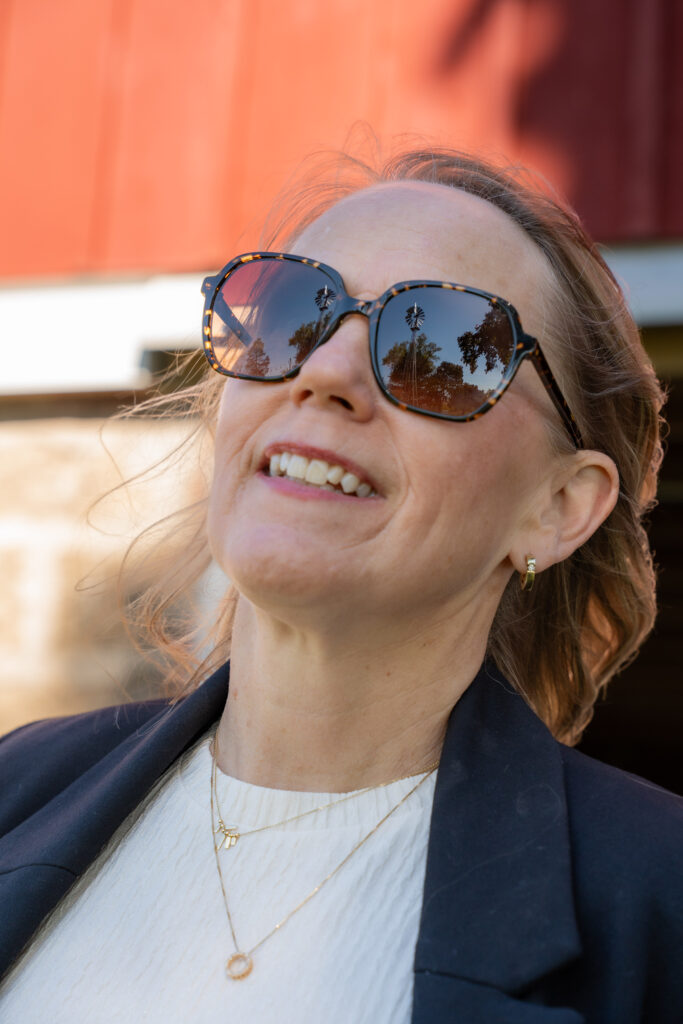
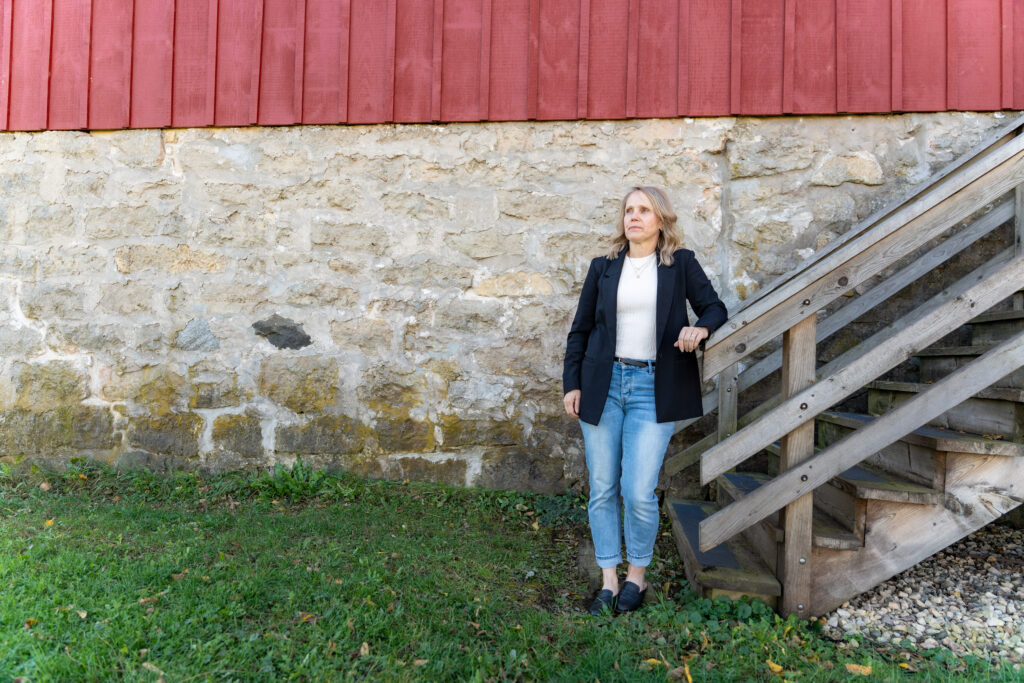
Feature photo: Karen Endres is the Farmer Wellness Coordinator at the Wisconsin Department of Agriculture, Trade and Consumer Protection. Photo by Jonás Tijerino