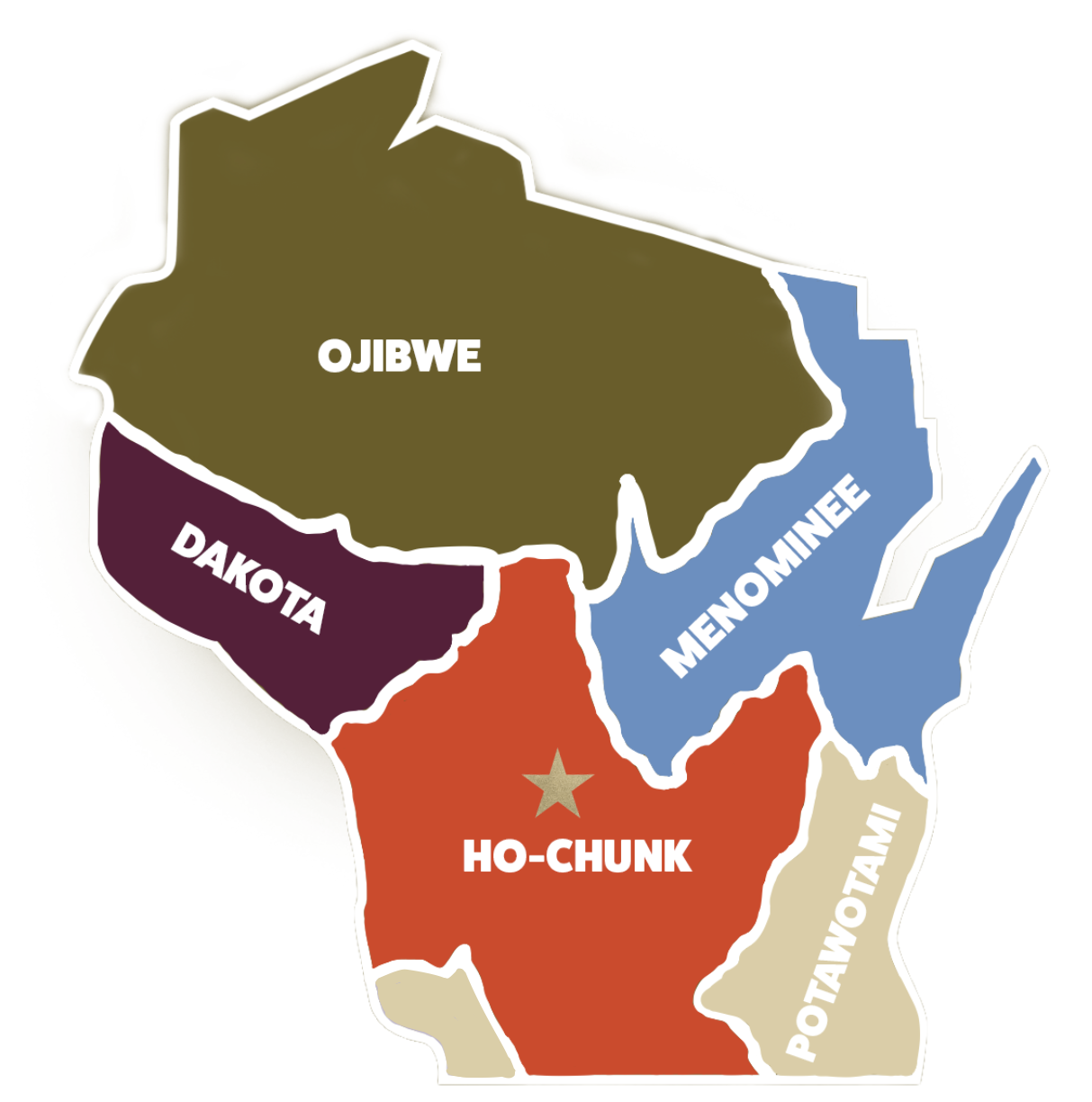
Long before the city of Madison was built, the Ho-Chunk people called this place Teejop — “Four Lakes.” For thousands of years, Ho-Chunk ancestors lived, hunted, gathered and celebrated life across the land of south central Wisconsin. These landscapes hold deep spiritual meaning and remain at the center of Ho-Chunk identity. Over centuries, the Ho-Chunk Nation endured many challenges — from the arrival of European settlers and devastating epidemics to repeated forced removals from their homelands and culture. Despite each attempt to displace their land and culture, Ho-Chunk families returned again and again to preserve their language, traditions and connection to Teejop. Today, their presence continues in the region’s civic, cultural and environmental life, reflecting a powerful story of survival and renewal. This timeline honors the living history of the Ho-Chunk by tracing how the Nation’s relationship with Teejop has shaped both the land and the communities that now share it.
10,000 B.C.E. — Post-glacial homeland
After the retreat of the last Ice Age glaciers, the Paleoindian people inhabited a land that was newly shaped by meltwater. They established camps near what would become the Four Lakes (Teejop).
7000 to 3000 B.C.E. — Early life and seasonal migration
Archaic groups thrived along the lakes and rivers of south-central Wisconsin, developing systems of hunting, fishing and gathering. Stone, bone and copper tools reveal the region’s ties to waters and wildlife — evidence now echoed by the discovery of 11 ancient dugout canoes in Lake Mendota that go back as far as 4,500 years.
1000 B.C.E. — The Woodland period and mound building
Ancient Indigenous people began building burial and effigy mounds shaped as animals and spirits that reflected cosmological beliefs.
1 to 1000 C.E. — Agricultural development and trade
Ancestral Indigenous communities cultivated crops while continuing to hunt and gather. They participated in large trade networks stretching across the Great Lakes. Village life became more permanent and traditions became grounded in the land.
1000 to 1200 — Community formation
According to theories, Ho-Chunk ancestors migrated west along the Ohio River, leading to the formation of Ho-Chunk communities along the Wisconsin and Rock Rivers. Traditions and oral histories from this period document the Nation’s presence in Teejop and the Four Lakes region.
Circa 1200 to 1600 — Settlement
Ho-Chunk built villages, farmed, fished and gathered — creating lasting ties to Teejop and the Wisconsin River.
Early 1600s — European contact
In 1634, French explorers met the Ho-Chunk in Green Bay, Lake Winnebago and Madison — beginning centuries of trade and upheaval.
17th to 18th centuries — Colonial pressures and population loss
Disease, war and migration reduced Ho-Chunk numbers, but ties to their homelands endured.
1816 to 1827 — Peace and boundary treaties
Following the War of 1812, the Ho-Chunk signed a series of peace agreements with the U.S. to end hostilities and reduce conflict. Treaties at Prairie du Chien in 1825 and Butte des Morts in 1827 established tribal boundaries but left disputes with New York tribes unresolved.
1829 — Land cession after Red Bird uprising
After conflict over illegal lead mining, the Ho-Chunk ceded mineral-rich lands in southwestern Wisconsin. In return, they received annuities, supplies and pardons for leaders of the uprising.
1832 — Post-Black Hawk War Treaty
Following the Black Hawk War, the Ho-Chunk were pressured to cede more land south of the Wisconsin River and move to the “neutral ground” in Iowa, though many remained in their Wisconsin homelands.
1837 — Large land cession and attempts at removal
A 1837 treaty forced the Ho-Chunk to give up their remaining Wisconsin lands. Many were forced west but often returned to their homelands.

Mid to late 1800s — Repeated removals
Despite repeated removals to Iowa, Minnesota, Nebraska and South Dakota, many Ho-Chunk people returned, maintaining deep ties to Wisconsin homelands.
Late 1800s to early 1900s — Cultural survival
Federal assimilation policies and boarding schools sought to erase Indigenous languages, Ho-Chunk clothing and their cultural names. However, families worked to preserve the Nation’s language (Hoocąk) and enduring ties to Lake Mendota, Lake Monona and the Four Lakes.
1970s to 1990s — Resurgence
The Ho-Chunk Nation pursued legal recognition and educational programs to support community services, preserve culture and protect sacred ancestral sites in south central Wisconsin.
20th century — Political recognition
The Ho-Chunk people reorganized their political structures, asserted treaty rights, revitalized language and cultural practices, and formally reclaimed the name Ho-Chunk Nation.
Today — Living presence in south central Wisconsin
Today, the Ho-Chunk Nation maintains government, cultural programs and stewardship of sacred sites, actively engaging in civic life around Madison and the Four Lakes. Events such as Treaty Day and the First Nations Cultural Landscape Tour honor their ties to the land.
FEATURE PHOTO COURTESY OF WISCONSIN HISTORICAL SOCIETY