The sauna floats on the Bergen waters in Norway, rocking gently in the morning waves. Thick steam stings my nose, clouding my vision. The heat doesn’t just press — it seeps, insists, burns. I can’t tell if I’m meant to endure it or escape.
I wait for the woman beside me to return from her plunge before climbing outside the small cabin. This air is cool but refreshing when I dart around the deck to find a ladder and slide down into the fjord below.
The immediate rush is invigorating. The water stings and steals my breath, and so I gasp for something longer, deeper. I chill in the strange calm of the fjord for just a moment more, before rushing back inside to the sauna and scorching heat.
A man next to me mutters something in Norwegian, motioning towards the stove in the corner. The others inside the sauna nod and so I do too, watching as he dumps a ladle of water on the rocks. Thick steam takes to the air instantly. I hold my breath and let the moment take me.
Thousands of miles from Bergen, that same practice is catching on in an unexpected place: Wisconsin. The saunas popping up here tie a long Nordic tradition together with modern wellness in ways that feel new to some, even though generations have long embraced the ritual for its social and restorative benefits.
A growing number of people are turning to the heat to seek rejuvenation and community inside the rising wave of saunas across the state. In today’s fast-paced culture, true rest can feel hard to come by.
As more saunas open around the state, they’re not just providing wellness — they’re shaping new rituals around connection, nature and resilience.
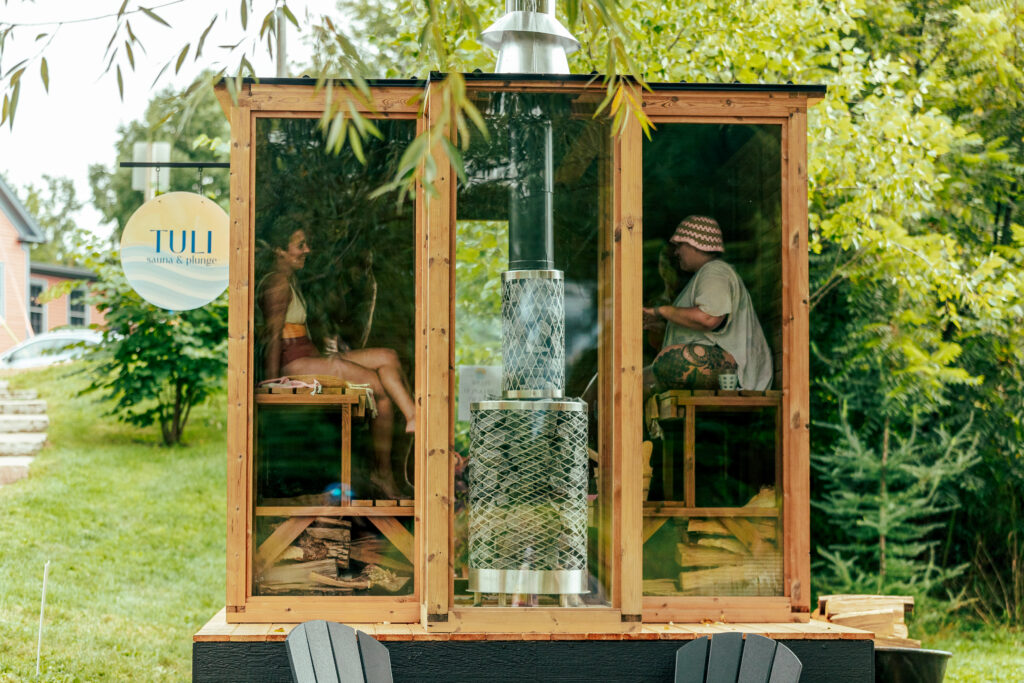
“It’s not a fad or a trend,” says Emily Thompson, owner of Tuli Sauna & Plunge in Paoli, just outside Madison. “It’s a holistic ritual that has stood the test of time.”
The rise of sauna culture in Wisconsin
Saunas are in their Renaissance period, and some say the major recent surge in popularity is undoubtedly due to more research on their health benefits.
A 2015 study from the University of Eastern Finland found that frequent sauna use — specifically four to seven times per week — is linked to a 40% lower risk of all-cause mortality compared with using a sauna once a week. Almost ten years later, the study is still cited in research highlighting the cardiovascular benefits of sauna use — similar to the effects achieved with moderate physical exercise.
Still, the boom in saunas across Wisconsin reflects a broader cultural shift. Wellness is having a moment. The world of yoga studios and boutique gyms is now moving outdoors and back to practices that ask us to slow down.
Thompson is just one member in the growing group of “sauna-preneurs” in Wisconsin — individuals who are launching community and mobile saunas throughout the state.
Many sauna operators talk about unique sauna adventures in Europe — much like mine — that left them wanting more back home. They tell stories about growing up with saunas in their routine, knowing it was something they could never outgrow.
Regardless, it’s an experience far too compelling and unforgettable to keep to oneself.
Most Wisconsin saunas today offer social sauna experiences, with sessions typically lasting 60 to 80 minutes and costing between $20 and $85. Guests may share the space with strangers, but many have an option to book the entire sauna for a private event.
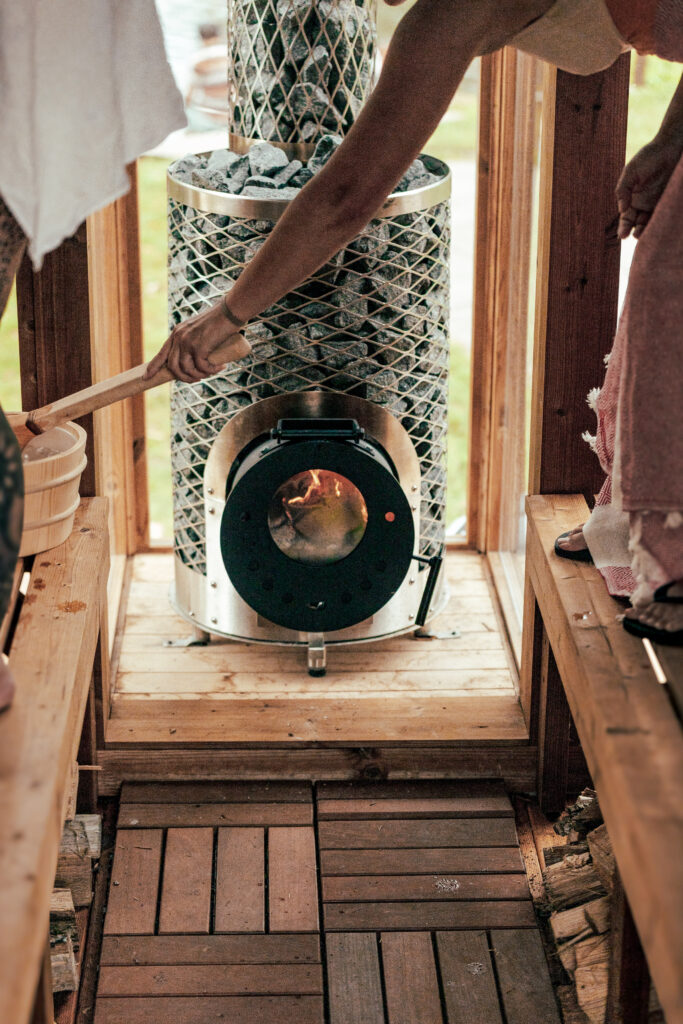
Tuli — Thompson’s sauna that opened over Labor Day weekend — isn’t sleek or high-tech. The spruce structure seats up to 10 people and leans on the long-held principles behind the Finnish method.
“What makes it a Finnish style is it’s lower on the humidity … although throwing water on the rocks is a crucial aspect of it, because you want that steam,” Thompson says. “It’s called ‘löyly’ in Finnish, and they call it the soul of the sauna. That’s what makes the sauna is the steam.”
From Finland to the Northwoods
Researchers credit the birth of Wisconsin sauna culture — pronounced “sow-na” in Finnish, not “saw-na” — to the emergence of Finnish-American immigrants in the late 19th century. The first Midwestern Finns settled just west of Minneapolis in rural Cokato, Minnesota, in 1864, says Arnold Alanen, an emeritus professor in the Department of Planning & Landscape Architecture at UW–Madison.
“It’s quite always amazing to me that no matter how humble their conditions might’ve been, that sauna was always such an essential part of their everyday life in their culture,” Alanen says.
Alanen has long studied his Finnish heritage. When he was 8, his family moved to live with his Finnish immigrant grandparents on their farm in northern Minnesota. They didn’t speak any English, so they immersed him in the Finnish language and culture. This upbringing spawned his “fascination” and eventually a career studying the culture. One of his works includes the introduction to Michael Nordskog’s book, “The Opposite of Cold: The Northwoods Finnish Sauna Tradition.”
Near Two Harbors, Minnesota — just north of Duluth — Nordskog’s family has a cabin and “a woodfire sauna building, two rooms built by an immigrant Finnish family, or built by someone in their community for them.” The same sauna is featured on the cover of his book.
“There’s something really magical about being on water.”
Both Alanen and Nordskog agree that sauna likely took root in the Upper Midwest because the forests, lakes and cold reminded them of home. Alanen explains that conifer trees — primarily spruce, pine and balsam in northern Wisconsin — were familiar to Finnish immigrants arriving from their homeland. Therefore, it was logical that the Finns would use Wisconsin examples of these species when constructing saunas in the state.
“We have long winters here … and we have a lot of lakes and a lot of water to interact with,” Nordskog says.
The power of heat and water
Along the banks of the Sugar River, Thompson blows up balloons in preparation for a birthday party at Tuli later that night. Even on the warm September evening, steam clouds windows in the wooden sauna, and patrons splash off the dock to cool down in the water.
Typically, a true sauna experience involves alternating between time in the steam of the sauna and a dip in the lake or river. That opportunity for a natural cold plunge is an additional homage to traditional sauna and bathing rituals.
“That’s why I wanted to be next to a natural body of water,” Thompson says. “Because that’s how it’s always been.”
The connection to bodies of water runs deep in sauna culture. For some, it’s essential — and not just for the easy access to a cold plunge.
In Door County, Zoe Lake, founder of Kiln Floating Sauna, took the idea one step further: building Wisconsin’s first floating sauna, which sits directly on Lake Michigan.
“There’s something really magical about being on water,” Lake says. “You can feel the boat move, you can hear the boat move — you’re taking yourself out of the element of being on land … I think it really adds to the beauty of sauna and relaxation.”
Science backs parts of the ritual, but much of the sauna’s healing reputation still rests on feeling. For many, it’s less about data and more about the belief that a good sweat can wash something out of you.
“I’ve kind of come to the conclusion that it’s not a way to detox in the sense … That’s not the way it’s going to happen,” Nordskog says. “But in the sense of detoxifying your skin and environmental toxins that you’re exposed to, for sure, because it’s the ultimate deep clean of your skin.”
More than 200 years since the Finnish population first established saunas in Wisconsin, people still agree with their simple sentiment: It just feels good.
“I went back to the hotel, slept for like 10 hours, and woke up and was just completely cured of all my ails,” says Jaime Meyer, owner of Hot Spell Sauna in Milwaukee, regarding her first authentic sauna experience in Sweden. “And I was like, ‘All right, when I get home, I need to figure out how to get this in my life.’”
That impulse is what’s fueling the modern wellness wave. From cold plunges to aromatherapy, people are seeking ways to feel better. With no technology allowed, the sauna doesn’t require much: It asks participants to simply unplug and sit through discomfort.
No barriers in the sauna
In our post-COVID-19 society, we see more people gravitating toward community spaces.
Jaclyn Ryan is the owner of KINDLED Community Sauna, a mobile sauna in the Madison area. Watching strangers open up with one another in the intimate sauna space is just one joy of the job.
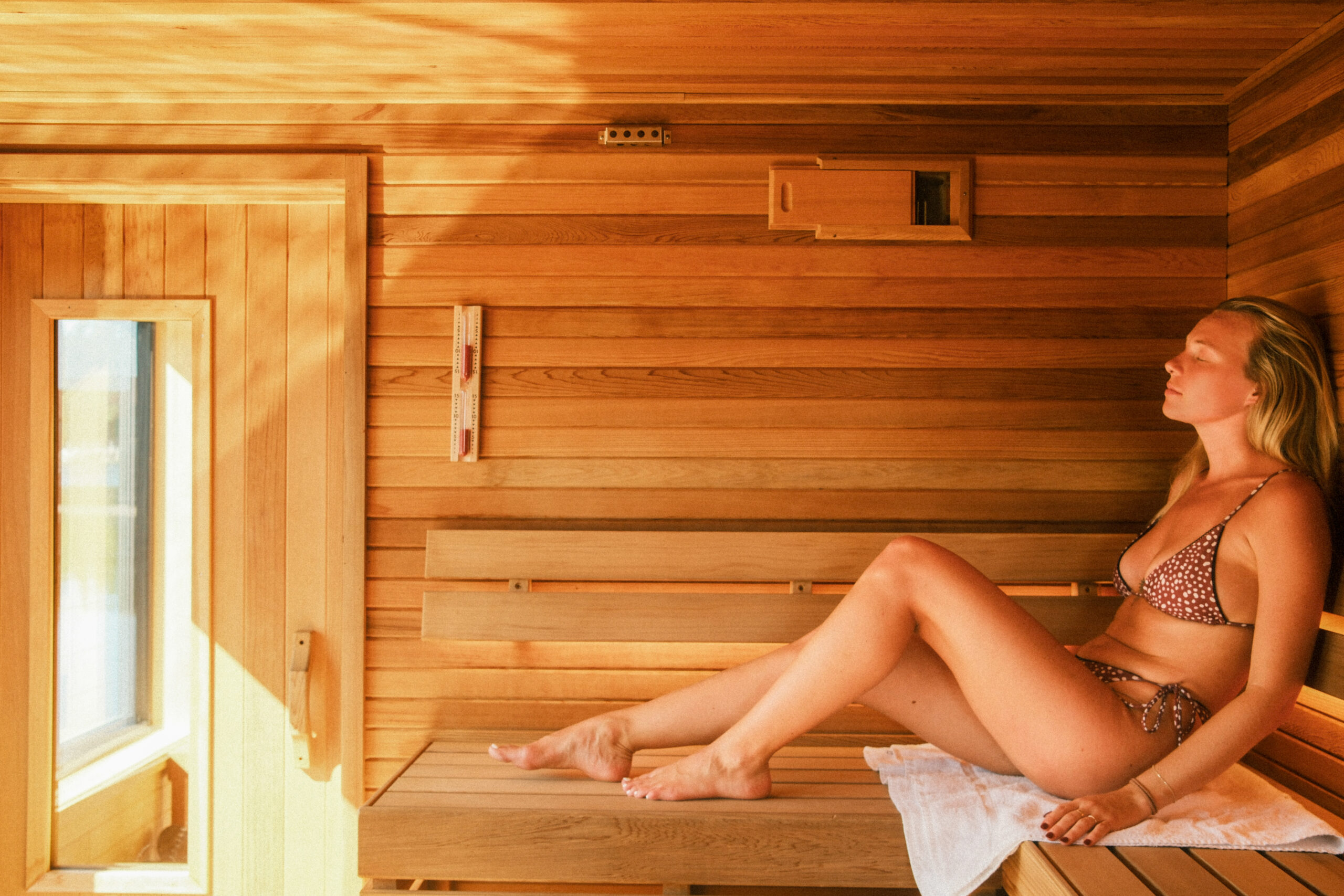
Ryan remembers a guest reaching out to pass along a recipe to another guest after they had discussed it during their session, and another time when a group of six strangers finished their sauna at a brewery and stayed there talking hours after their session ended.
“I think enduring the heat and being uncomfortable in that way also makes you a little vulnerable,” Ryan says. “People are prone to sharing and opening up more.”
Nordskog agrees that sauna culture has had this effect for a while.
“It’s this whole Finnish concept that there’s no difference in sauna,” he says. “Everything is equal … Either you’re wearing a towel or nothing at all, and it’s just like all the barriers are done.”
find a sauna near you
Feature photo: Zoe Lake walks across Kiln Floating Sauna in Door County. Photo by Laura, xoMeStudio