“UP!”
Players and fans shout at the disc flying through the air, gleaming white as sunlight hits all 175 grams of plastic. It’s a crisp late-summer evening in Madison, and Breese Stevens Field is packed with eager fans watching the Ultimate Frisbee Association championship game.
Most fans in the bleachers are already familiar with the game of Ultimate Frisbee, but some are first-time spectators.
Those select few are the demographic that folks like Tim DeByl, commissioner of the Ultimate Frisbee Association, are targeting.
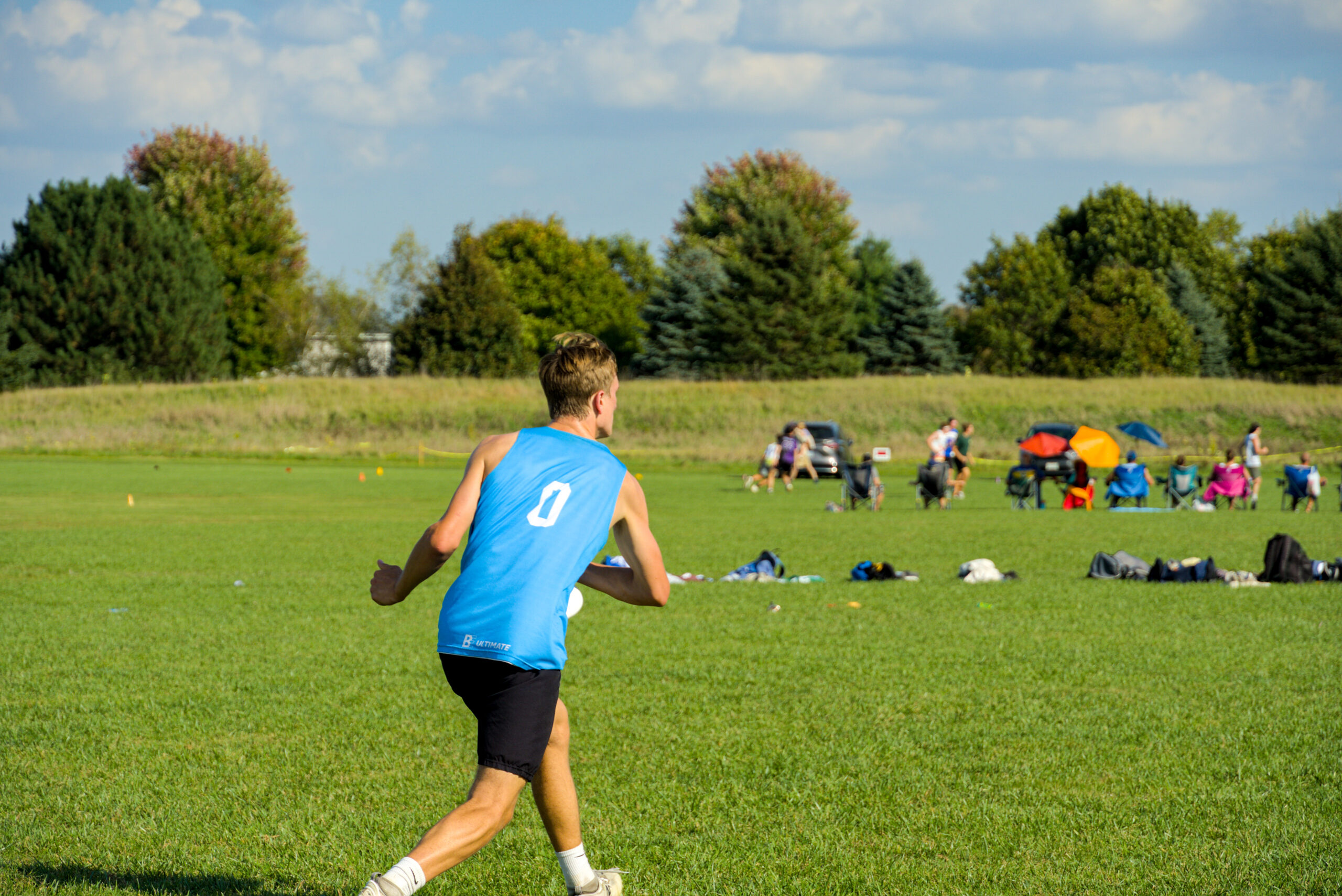
Ultimate has a rich yet humble history in Wisconsin, with UW–Madison’s men’s team, the Wisconsin Hodags, winning the national college championship three times since 2001, and Madison’s professional ultimate team, the Madison Radicals, winning an Ultimate Frisbee Association title in 2018. However, the up-and-coming sport aims to expand beyond its niche community in the state. Ultimate might be a sport on the rise, yet two keys for growth remain: involving and engaging broader audiences, and recruiting young players to the sport.
“No one’s going to come to a game, no one’s going to play ultimate, no one’s going to buy a Frisbee if they don’t even know if the game exists,” DeByl says.
Ultimate Frisbee has been on the outskirts of mainstream sports viewers since its inception. While it has small pockets of popularity, most notably in New England and the Pacific Northwest, the majority of the country has never been exposed to the sport. Wisconsin is one of the few exceptions, with its larger cities serving as hotbeds for avid players and fans of Ultimate Frisbee.
The question still remains, however, of how to grow the game into a mainstream sport with professional teams and sponsorships.
The rise of Madison ultimate
The first comparisons many make to Ultimate Frisbee are soccer and football. It’s a fast-paced sport that requires endurance, just like soccer, but it also leans into throwing mechanics similar to football. It’s team-based, with two teams of seven playing on a large, rectangular grass field.
Where Ultimate Frisbee differs from other sports, however, is with its spirit.
Almost all Ultimate Frisbee games, except for high-level play, are fully self-officiated. As opposed to a referee making calls, self-officiating opens the door to honest discourse and problem solving among players. It’s a feature that players quickly fall in love with.
“I wish other parts of our lives were more like this, right, where if something was bugging you, you call a foul,” says Andy Alexander, a longtime Madison resident and Madison Area Ultimate Frisbee player. The contrast of the game’s spirit and its hyper-competitive foundation create a welcoming yet challenging scene, ultimate players say.
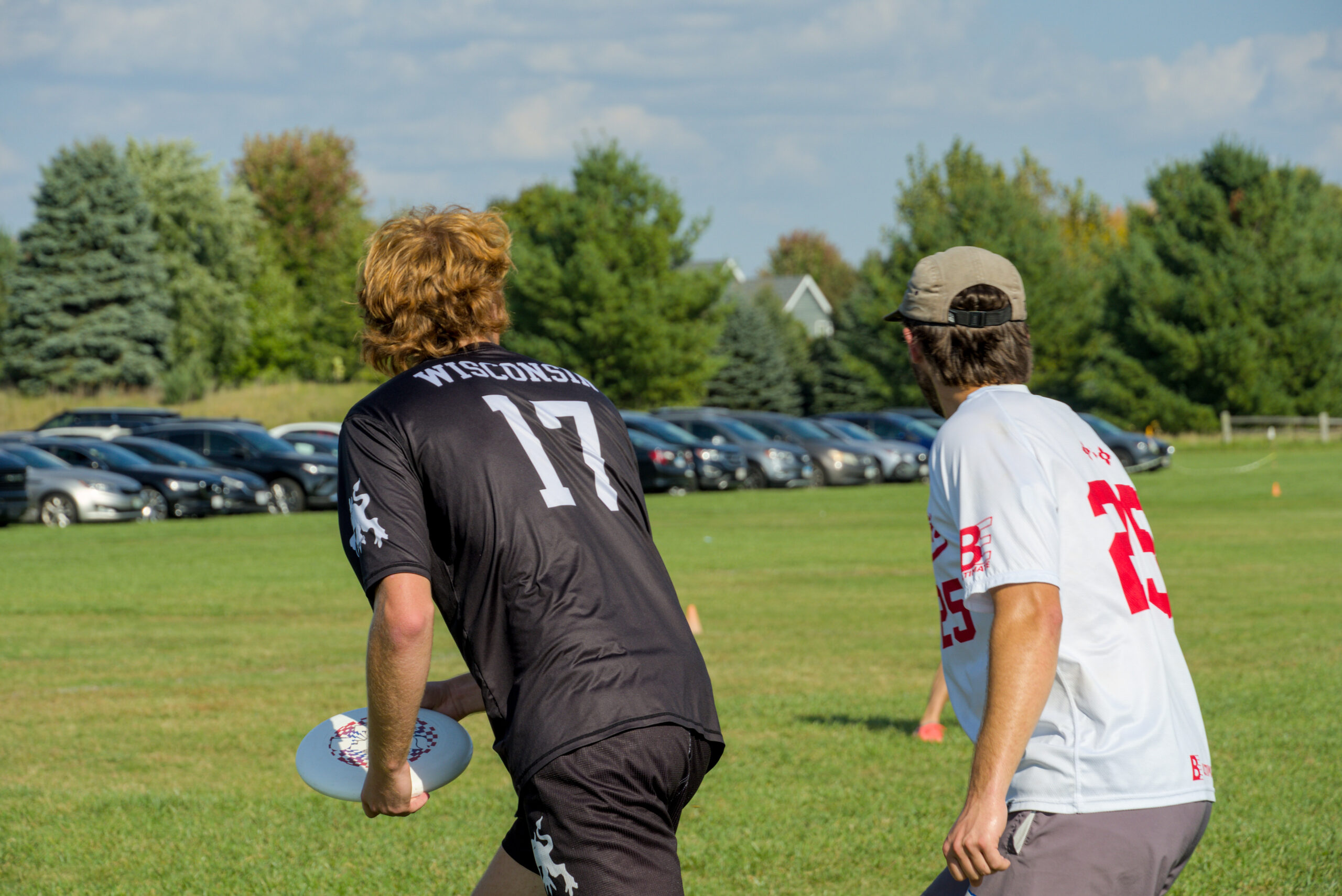
Wisconsin Ultimate Frisbee organizations like the Madison Ultimate Frisbee Association play a huge role in attracting and retaining players around the state. The nonprofit association runs four leagues — one for each season — aiming to give individuals a chance to discover, learn and eventually master the game of Ultimate Frisbee. It has leagues for players as young as 7 years old all the way to grandmasters, who are 45 years and older.
“A few of my friends, I’ve been playing Ultimate Frisbee with on that team for almost 25 years,” Alexander says, “so that’s been really great in terms of developing great friendships.”
Alexander’s son, Graeme, plays on the Hodags. Graeme’s involvement in the game started when he was a toddler, Alexander says.
“He was probably even nursed on the sideline,” Alexander says, noting that he wasn’t the only player to bring his child to games. “When players would go in and out, people would take turns holding the babies.”
Increasing visibility at Breese Stevens
Beyond getting young players involved, the ultimate’s visibility contributes to its expansion. This year, the Ultimate Frisbee Association final was held on Madison’s east side at Breese Stevens Field, home of the Madison Radicals.
DeByl, a former Radicals coach, played a role in bringing the field into the public eye in 2012, boosting the venue’s relevance within the Madison community.
The same year, the Ultimate Frisbee Association, originally called the American Ultimate Disc League, was born.
DeByl used to own his own marketing firm while playing and coaching various teams on the side, but once COVID-19 hit, he quit his job and became a full-time chief operating officer for the Ultimate Frisbee Association. He later became commissioner while still holding a small coaching role for the Radicals.
“Ultimate is my life, and it’s been great.”
Increasing the visibility of the sport to grow the sport is the association’s main purpose, DeByl says. The Radicals have the best home attendance of any team in the Ultimate Frisbee Association, he says, thanks to the sport’s popularity in Madison.
“We’ve had 30,000 or 40,000 unique people through the gates [of Breese Stevens Field] over the last 10 years,” DeByl says. “This is really cool, because those people probably didn’t know much of ultimate or had never seen it played or anything.”
Bringing new players to the scene is vital to the sport’s growth outside of just Madison or Milwaukee, organizers say.
Female visibility and the streaming conundrum
Another professional ultimate league is the Premier Ultimate League, which formed in 2019. Since its inception, it has aimed to increase equity and visibility for female, transgender, intersex, genderqueer, genderfluid and nonbinary players while maintaining a competitive playing environment.
The mounting popularity of ultimate has led to higher demand for the sport to be broadcasted, and streaming is likely ultimate’s best bet for expanding its audience online. Should leagues stick with a subscription-based method to watch, or should they drop the paywall and offer everything for free?
Raleke Hughes, president and treasurer of Milwaukee’s women’s Premier Ultimate League team, the Milwaukee Monarchs, favors offering free content, but recognizes that paid viewership will offer long-term financial stability for the sport.
“Having people be able to share it and see … how we’re growing as a league and growing as a team is where I personally lean,” Hughes says.
This summer, the Premier Ultimate League played in a showcase game prior to the Ultimate Frisbee Association final to shed light on the promising young league.
Hughes pointed to showcase games as driving forces for gaining viewership.
“You can get good quality games with the women, just like you can with the [Ultimate Frisbee Association],” Hughes says.
Fans and players alike say ultimate is one of the most inclusive and equitable sports, but progress is still needed at the youth level. Hughes helps coach Wauwatosa East High School’s team for girls and nonbinary people, and it’s one of the only girls’ division high school teams in the area outside of Madison, she says.
Lilly Innes is a captain on the UW–Madison women’s team, Bella Donna. She says not everyone on the team comes in with a predisposition to ultimate, but even having more casual connections to the game is enough to get players like her started. She only began playing in college, she says.
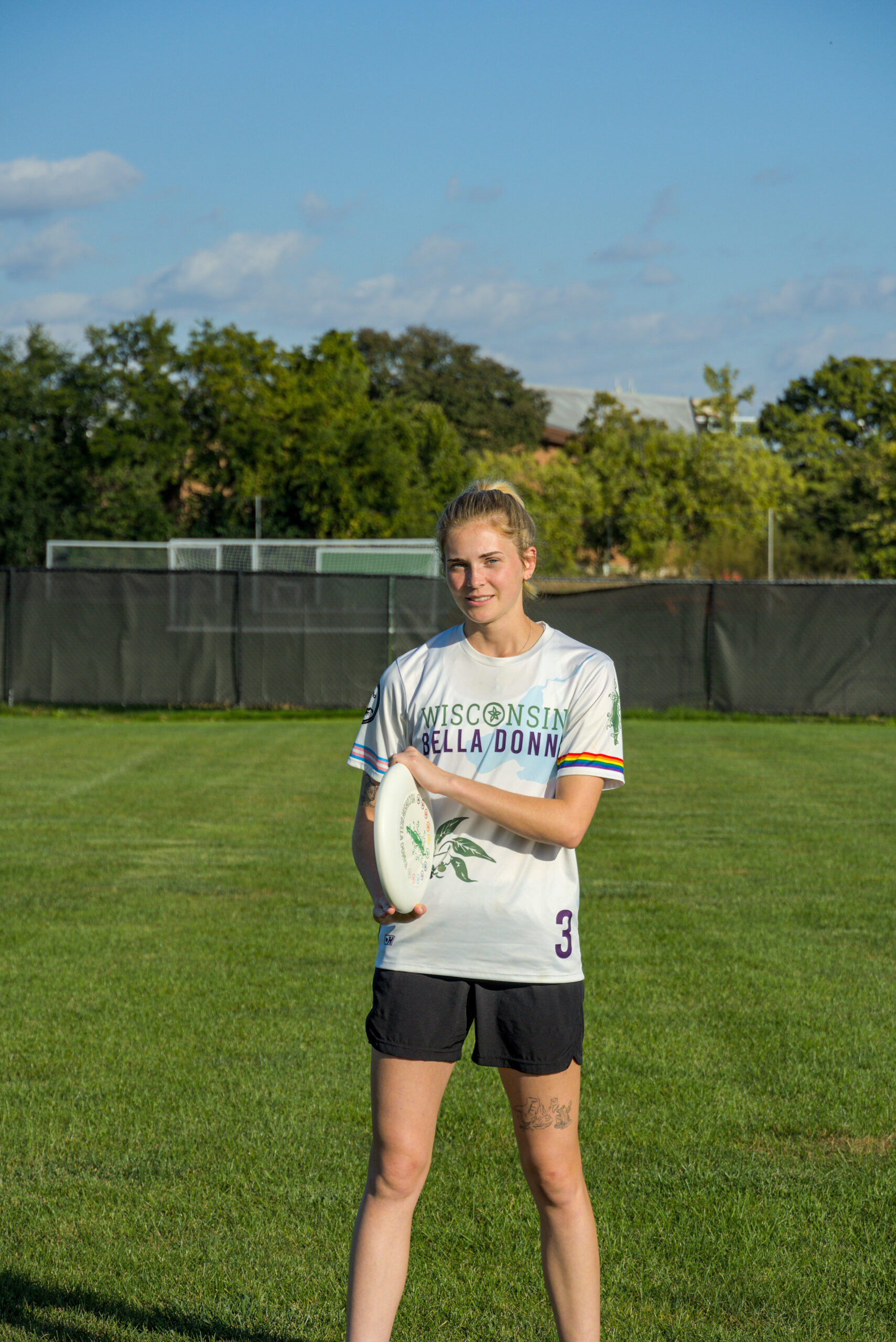
“I knew my freshman [roommate] was playing, and I wanted to throw with her,” Innes says.
Bella Donna also hosts annual high school youth camps, also open to elementary and middle schoolers, with the Madison Ultimate Frisbee Association during the winter, Innes says.
“One of the most important things we do as a program is to connect with female athletes and also support them,” Innes says, “because this is one of the only safe spaces I’ve experienced as a female athlete.”
Hughes and DeByl cite the COVID-19 pandemic as a reason the sport’s growth was stunted in recent years.
“It’s hard to bring back [Ultimate Frisbee] with COVID, because people just tend to forget stuff,” Debyl says.
Despite Ultimate Frisbee’s tumultuous journey through COVID-19, the sport is ever-growing, even outside of Madison and Milwaukee. Players of all ages continue to love and cherish their favorite niche pastime.
“It’s been not only an athletic activity, but also a source of community and friendship,” Alexander says.
Feature photo: Wisconsin Hodags’ Jude Ogden goes up for a disc. The Hodags have won three national championships since 2001. Photo by Alex Yu