The cows tell you all you need to know about Epic.
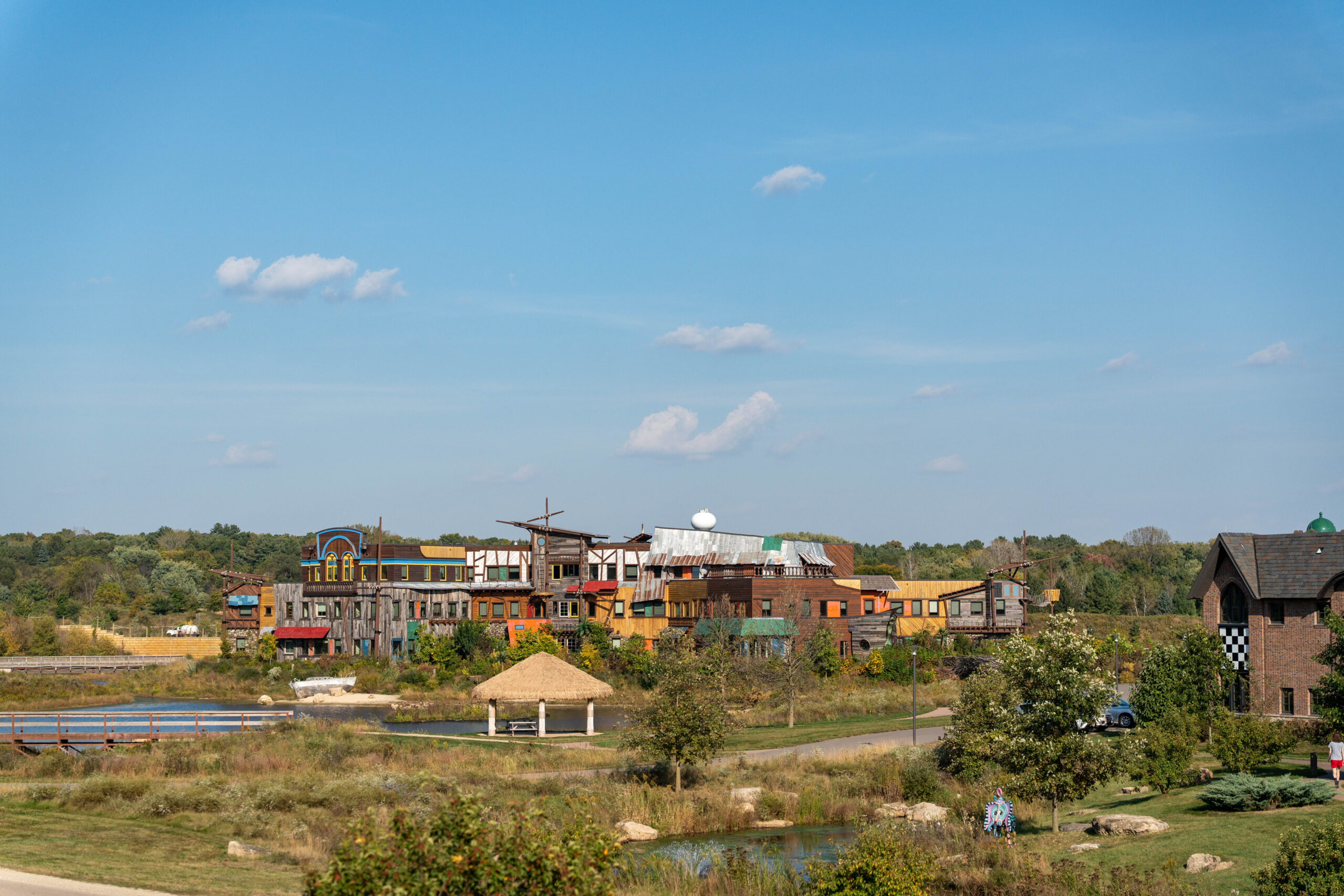
Epic is so massive — with a campus spanning more than 1,600 acres in the Madison suburb of Verona — that the health care company rents its land to farmers for their cows to graze.
That’s what makes it so uniquely Wisconsin, says Belle Counts, a student intern at Epic and UW–Madison senior.

The first few days Counts spent as an intern walking around campus felt more like a trip to a theme park than the start of a new job. She navigated through lengthy hallways lined with whimsical artwork, painted using a kaleidoscope of color, discovering something new on every corner, even on the ceilings — unlike the standard beige walls of most corporate offices.
Epic Systems may have planted its fantastical Intergalactic Headquarters in Verona in 2005, but its reach stretches far beyond state lines.
“I go visit family in other parts of the country and they say, ‘Oh, we have this new thing called MyChart,’” says Katie Beilfuss, a resident of the east side of Madison for 27 years. “It’s from our little town and nobody knows.”
Epics’ growth is reshaping Dane County, bringing more than 1,900 employees this past summer, according to Counts, and a wave of new development to the Madison area. Today, it is not only expanding its national footprint — it’s transforming the daily rhythms of life in Madison. The company is drawing in young professionals from across the country and anchoring them in a city once known mostly for its university. As the company continues to dominate the health records market, its influence on local economy, infrastructure and community identity is expected to expand.
“I can only imagine [Epic is] growing things exponentially compared to what would’ve happened without Epic,” says Siri Allegra-Berger, an Epic employee who just moved to the east side of Madison.
Chances are you’ve already met Epic, even if you don’t know it.
Founded in 1979, Epic Systems is a software company that develops electronic health record systems, such as MyChart, used to track patient data. Today Epic is the largest electronic health record provider in the U.S., supporting “42.3% of the acute care EHR market, up from 39.1% in the previous year,” according to Fierce Healthcare, a health care news provider. Currently there are over 325 million patients actively in Epic’s system.
“Epic is basically what a lot of hospital systems and groups use to document encounters … in one system that can be transferred to other hospitals,” says Amelia Badipour, who works in the University of Virginia Emergency Department recording patient visits and assisting physicians as a medical scribe. “Epic really streamlines a lot of the processing and communication.”
Epic’s Wisconsin DNA
For Counts, the combination of studying biomedical engineering and growing up in Wisconsin made joining Epic feel inevitable. She’d been familiar with the company for years — her mom was a doctor, so Epic was always part of the conversation.
However, the company’s allure extends beyond familiarity, and for some it is the reason they remain in Madison.
“There aren’t too many companies here that would keep me in Madison, especially because this isn’t my hometown,” she says.

Epic hires heavily from UW–Madison, drawing recent graduates and alumni into the region, according to the Wisconsin Alumni Association.
“I’d say probably 80% of my coworkers were all UW alums,” Counts says. “You definitely see a lot of UW flags in people’s offices. … Everyone was wearing Wisconsin stuff [for gamedays]. Literally everyone.”
But Epic’s ties to Wisconsin are not just about who it hires — they show up in the company culture, too.
A farmers’ market every Tuesday selling fresh produce and the “modes of transportation themed after cows” is something you “probably wouldn’t see … if Epic was in a different state,” making it a fun way for employees to connect with Wisconsin, Allegra-Berger says.
Newcomers settle in Madison
Still, Epic pulls college graduates from across the country.
Allegra-Berger, fresh to the Midwest, grew up in Colorado but went to school in Boston.
“Epic is a place that really encourages growth … and everyone at the company is very kind, very welcoming and very friendly. So it’s making it feel kind of like home.”
“It felt a little scary to be far from a lot of things that I know and a lot of people that I know,” Allegra-Berger says. If Epic wasn’t here, she says she probably wouldn’t have ended up in Madison.
Yet, she says Madison’s “funky, almost hipness” energy, combined with Epic’s welcoming culture, rapid growth and ability to attract young workers, helped her adjust.
“A lot of my roots just aren’t here,” Allegra-Berger says. “However, Epic is a place that really encourages growth … and everyone at the company is very kind, very welcoming and very friendly. So it’s making it feel kind of like home.”
Gentrification in Dane County
Living in Madison for nearly three decades, Beilfuss has watched how Epic has changed Madison and its surrounding communities. For example, the number of Epic employees flying out of the Dane County Regional Airport has increased travel options and doubled the size of the airport for people who live in the area — whether or not they work at Epic.
“We have flights from our airport to so many more places that we never did before,” Beilfuss says. “We used to drive down to O’Hare to catch flights all the time or take the bus.”

Epic has also fueled changes to Madison’s infrastructure, housing and schools. Verona opened a new high school in 2020 to support an influx of families, while Madison’s east side hosts a population of young professionals who fuel local businesses. The population in that part of town has shifted to places like East Washington Avenue, largely driven by young Epic employees who prefer city living over what Beilfuss calls the “sleepy bedroom community” of Verona.
“It has meant more restaurants, more music venues … there’s more stuff happening because there’s a community of people that are living [downtown] and spending their money,” she says.
As one of the new younger employees, Allegra-Berger says the people coming into Madison are smart and want to be involved in the community.
“People are active, people are excited, people are artistic, people are encouraged to make things happen, do cool things, organize events — there’s just a lot of energy,” she says.
Not all reactions to Epic’s growth have been positive, Beilfuss says, adding that some wish the influx of activity would go away.
“There’s people in our neighborhood who are less happy with that because of course it brings more people and more noise and more cars and it’s not as peaceful of a neighborhood as it maybe was before,” Beilfuss says.
“I’d love to know more about what Epic is doing to support the community other than having a business that pays people well so that they can go spend their money in the community.”

With Epic’s command of the medical records market, the company expects to continue to expand its influence — not only on health care, but on the Madison community as well. With this, Beilfuss wonders how deeply Epic can invest in the people and places that make the city home.
“I’d love to know more about what Epic is doing to support the community other than having a business that pays people well so that they can go spend their money in the community,” she says.
Feature Photo: The King’s Cross Cafeteria at Epic’s campus is a whimsical dining space modeled after the famous London train station.