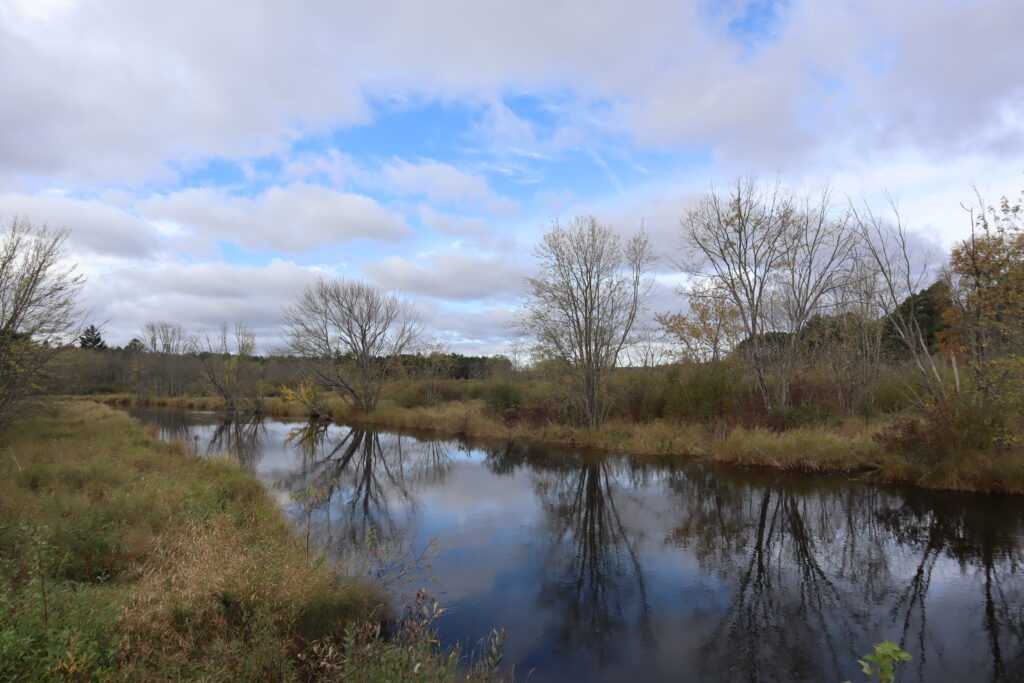
About 20 paces along State Highway 47 from Mary Burns’ home studio in northern Wisconsin is a narrow path down to the Manitowish River, beaten down and carved out by years of footsteps pummeling the tall grasses to make contact with the water.
No definitive shoreline divides the grass path from the water — it merely encroaches on and seeps into the grass surrounding the river, making the landscape moist and swampy. The water glows grey under the brightly overcast sky. It is persistent. It makes itself known by glistening gently against the cool breeze, interrupted only by the sporadic blades of stiff, yellow grass.
“My husband likes to say that in Vilas County, for every three steps you take, one of them is going to squish,” Burns says.
She would know.
Her backyard is a marshy extension of the river she’s known since she was a child.
Burns has felt deeply connected to water and the natural world her entire life, and while developing a previous exhibit, she realized she wanted to focus her artwork around it. During the process of creating her Ancestral Women Exhibit, Burns recognized strong relationships with water was a defining trait among many of the women she portrayed.
In 2021, the Wisconsin Department of Natural Resources launched the Wonderful Waters of Wisconsin initiative to balance the restoration of damaged ecosystems with the protection of those still thriving. When Burns perceived inadequate attention toward water conservation, she identified an opportunity to spotlight those dedicated to such proactive efforts.
For Burns, whose personal life and artistic career have been rooted in love and appreciation for the natural world, illuminating women’s efforts to protect the world’s waters is a pursuit that feels innate. Burns’ current exhibit, “Women and Water,” aims to uplift women water protectors from all around the world. Through her artistic storytelling, Burns creates a path for audiences to engage meaningfully with water conservation by becoming familiar with the wide breadth of work achieved by the exhibit’s subjects.
“I feel called to do this work and to bring the stories of these women to a broader audience, for sure, and hopefully to inspire people to take action themselves,” Burns says.
Raised stakes for water preservation
The need to preserve and protect freshwater reserves is more urgent than ever, especially in places like Wisconsin, which is surrounded by Lake Michigan and Lake Superior. Combined, these lakes represent 20% of the world’s available fresh water, and almost 3% of the state’s total area — nearly 1 million acres — is lakes.
Access to fresh water is under threat worldwide. The United Nations aims to protect 30% of global land and sea areas by 2030 to preserve biodiversity, yet demand for clean water is expected to exceed supply by 40% by then — leaving an estimated 1.6 billion people without safe drinking water.
Still, according to the publication Food and Water Watch, the White House’s 2026 fiscal year budget proposes large cuts to federal programs that protect the quality of drinking water.
The Wonderful Waters of Wisconsin initiative aims to allocate resources toward proactive water protection, working now to preserve high-quality water, rather than restoring it once damage is done.
But this stewardship of waters depends on reliable partnerships throughout Wisconsin to contribute to building public awareness and responsibility, says Lauren Haydon, Wisconsin Department of Natural Resources watershed protection coordinator.
“I just really would want people to know that the things that they do, collectively, make a difference, and that there’s multiple ways to measure that impact,” Haydon says.
Developing emotional ties between communities and water is a powerful tool in mobilizing people to want to protect it, Haydon says. She points to community-driven messaging that celebrates local watersheds as a way to inspire protection — an approach reflected in Burns’s exhibit.
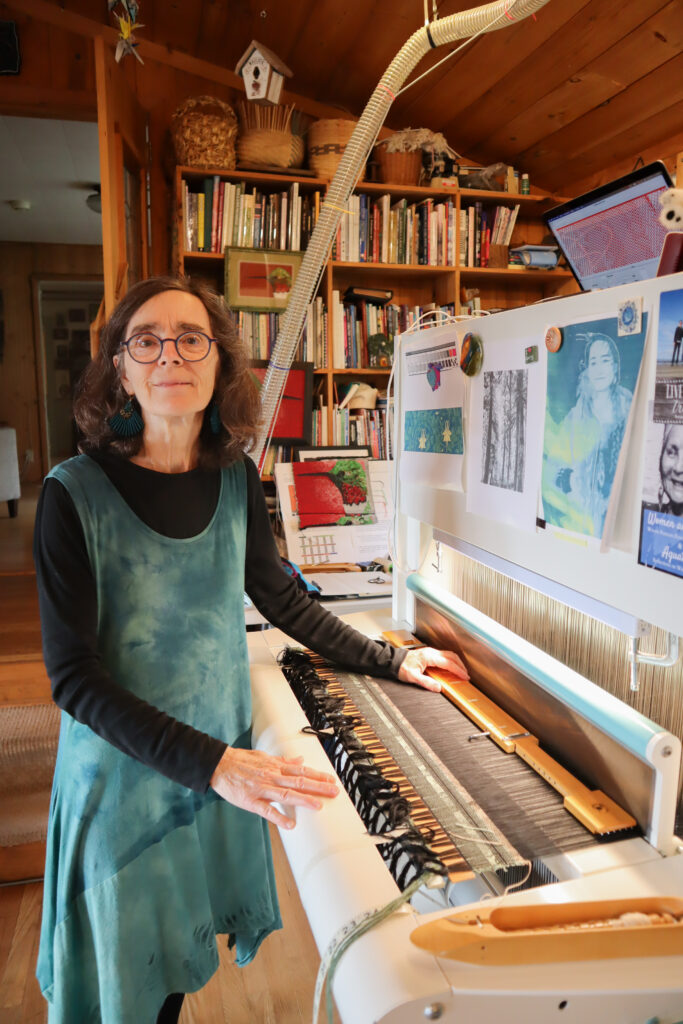
“Women and Water” is made up of nearly 30 woven portraits of scientists, educators, Indigenous leaders, farmers, activists and healers. Weaving them gave Burns an opportunity to measure the impact of women from around the world and from all walks of life.
Burns, who has been weaving since she was in high school, specializes in Jacquard weaves, which are characterized by especially intricate patterns that require a specific loom to control individual threads. Intricacy is a pillar of Burns’ 29 portraits, with each one depicting its subject in different contexts. Some can be found out in the field — scuba diving amidst a swarm of fish or wielding the tools that they use to conduct research each day. Others are more traditional portrait-style close-ups where, thread by thread, Burns brings to life every wrinkle, smile and strand of hair in the women she portrays.
“Every day, ordinary people can do extraordinary things.”
She developed the concept for “Women and Water” while researching Josephine Mandamin, an Anishinaabe elder who spread the practice of water-walking by walking more than 10,000 miles along shorelines of all the Great Lakes to raise awareness and help inspire people to protect them.
Burns cites this work, her own deep connection to water and her observations of the effects of pollution and lack of waterway conservation as some of the primary touchstones for her exhibit. The first portrait she wove was of Mandamin, and as she took on the research process for the rest of the exhibit, representing women of all different backgrounds and careers — farmers, activists and researchers — was a driving force.
“It’s showing that every day, ordinary people can do extraordinary things,” Burns says.
Fateful stewardship
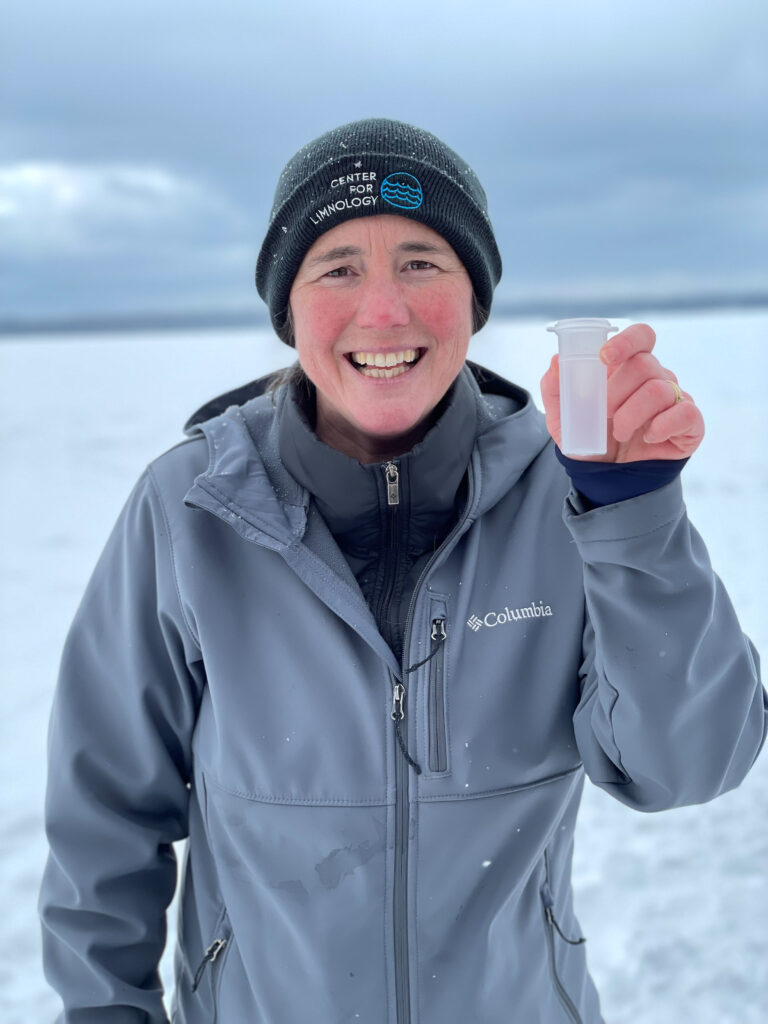
A portion of the exhibit is dedicated to illuminating the people on the ground, Burns says. Two of the women featured are UW–Madison’s Center for Limnology researchers Gretchen Gerrish and Carol Warden.
Both of them recall women and water being significant players in their upbringing and careers. Gerrish notes her lifelong love for water culminating with her connection to the Tippecanoe River in Indiana, the state where she was born, before she moved to Wisconsin in the sixth grade.
“I think some of my most exciting memories are, my brother and I, when we were tiny, would take the little jon boat out and cruise around and go to different islands on the river and just had this sense of freedom and exploration that was unhindered by really anything,” Gerrish says.
Gerrish dubs her career journey with water as a “circle.” An evolutionary ecologist, Gerrish currently conducts field research on lake phenology. She also directs the Center for Limnology’s northern site, Trout Lake Station, just 30 miles south of the border of Michigan’s Upper Peninsula, where she spent two summers of her undergraduate career and first recognized water needed research to better understand and steward it.
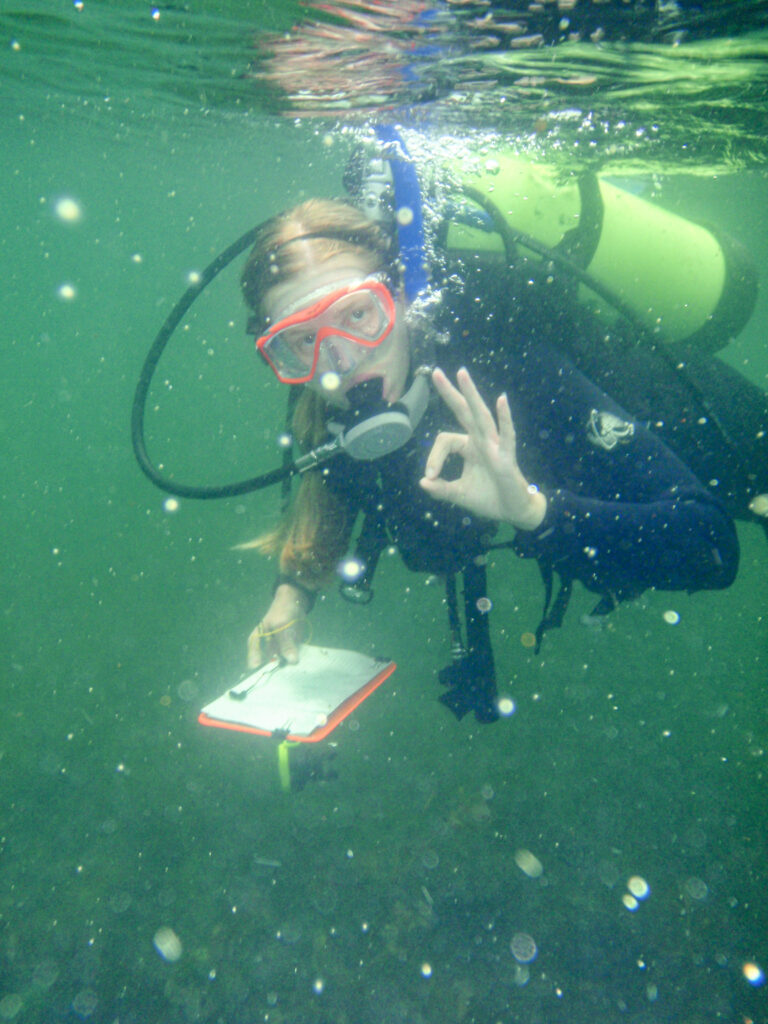
Warden, who does long-term ecological research on aquatic plants at Trout Lake, says her career path bringing her back to water felt like fate. She always wanted to be a steward for the natural world — from growing up in a pocket of lakes in northern Wisconsin to studying geography in her undergraduate career.
Warden and Burns first met during a program at Trout Lake called LTEArts, which connects the long-term ecological research team with artists to explore alternative methods of communicating science.
“I was a photographer before I was a scientist,” Warden says. “And you know the old adage, ‘A picture is worth 1,000 words,’ and I think that is true with art as well.”
Inspiration through storytelling
Burns’ 29 woven portraits represent 39 different women from more than 20 countries. Beyond these threads are rich personal histories, career achievements and cultural milestones. Rachel Carson raised public awareness about pesticides’ harmful effects on wildlife and the environment. Ikal Angelei led the fight against the construction of a dam that would restrict water access for Indigenous communities around Lake Turkana.
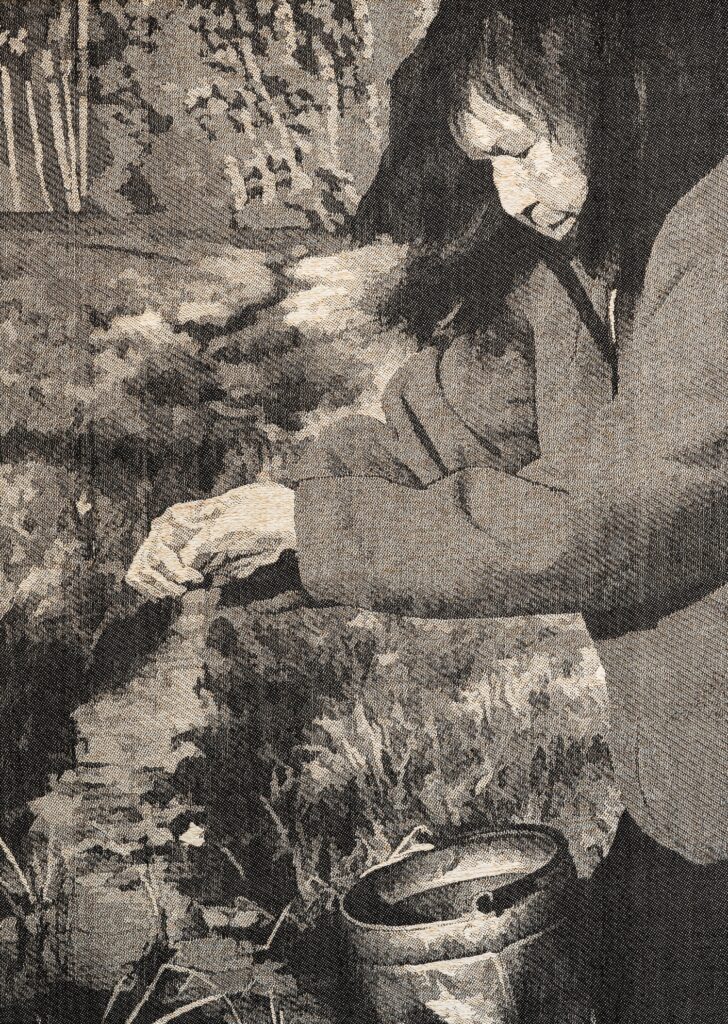
“Women in Water” first. Photo courtesy of Mary Burns
Communicating these women’s stories, even if through solely visual representation, is a storytelling form Burns hopes can evoke inspiration.
“If you’re trying to convince somebody of some scientific problem, they maybe can’t open up to that,” Burns says. “But if you approach it differently — say through a story or the artwork — people can resonate with that more easily. I think it opens people’s hearts.”
UW–Madison life sciences communication professor Nan Li, who researches how science is visually communicated in society, says artistic formats offer opportunities for audiences to develop more meaningful perceptions of scientific topics.
Li says a significant benefit to communicating science through art is how its aesthetics and themes afford audiences the capacity to evoke a nuanced and sophisticated set of emotions, as opposed to standard data sets that may garner only one type of reaction.

“It just engages people at a deeper level,” Li says. “They appreciate the beauty, they appreciate the content, appreciate all of the creativity, but at the same time, I think that initial emotion and tension makes them think more carefully about what this issue means to themselves.”
Narrative storytelling is a natural way for humans to engage with information, Li says. Portraits, in this case, create a window for audiences to connect with faces and, therefore, identities. Burns also wrote a book with her research findings as a supplementary element to her exhibit to encourage audiences to engage themselves further in the work accomplished by her portrait subjects.
“I hope people are inspired by these women to take action, and I hope that people looking at the exhibit and reading these stories will see that they aren’t alone,” Burns says. “There are people all over the world who are doing important work and … yes, we can do that, too.”
To see Burns’ work, visit Women and Water at manitowishriverstudio.com/women-water/
What water means to wisconsin
With two Great Lakes on our borders and tens of thousands of inland lakes and rivers, it’s a given that Wisconsin is shaped by its waters. They fuel Wisconsin’s economy, sustain our ecosystems and carry deep ceremonial meaning for many Indigenous peoples. With life’s tides pulling us back and forth, it’s easy to feel directionless. But if anything can act as a guidepost for Wisconsinites, it’s the opportunities and identities that emerge in the wake of our waters.
This is what water means to Wisconsin, by the numbers.
6.4
million
acres of Great Lakes lie within Wisconsin’s borders (4.7 million acres of Lake Michigan, 1.7 million acres of Lake Superior). The Lake Michigan shoreline in the Milwaukee area holds Wisconsin’s highest population density.

14,000
inland lakes fill our landscape, covering nearly
3%
of Wisconsin’s total area.
2,444
trout streams contribute to Wisconsin’s rich fishing industry. Together, these streams would span over 956 miles.
7 in 10
Wisconsinites, and
97%
of Wisconsin’s inland communities rely on groundwater for their water supply.
$928 million
from boating and fishing contributed to the state’s economy in 2024 — out of the total $11.2 billion that the state’s outdoor recreation industry reeled in that year.
6
distinct Lake Superior Chippewa (Ojibwe) communities reside in Wisconsin, and each views water as a living, sacred spirit and a central element in traditional Ojibwe creation stories.
80
(or more) citizen-based community groups are dedicated to water protection in Wisconsin, varying widely in their missions and membership.
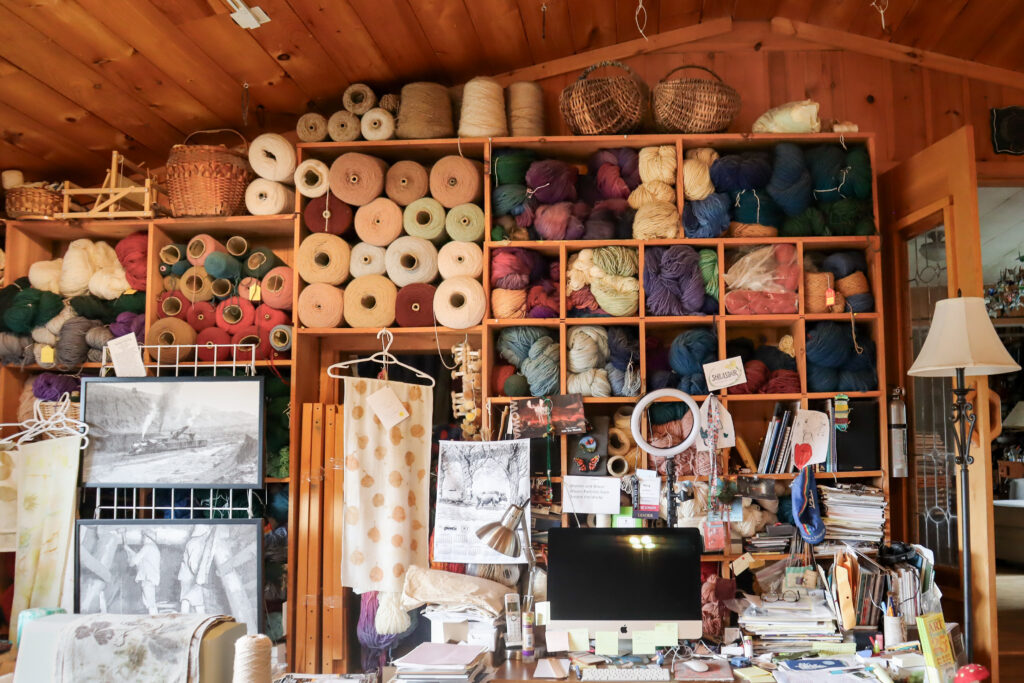
Feature photo: The larger loom in Burns’ studio is used for carpet weaving, another one of her focuses. Photo by Sophie Wooldridge