When Todd Larson was negotiating ceasefires between Serbia, Croatia, NATO and the former Yugoslavia while serving overseas, his colleagues held their rosaries tight and wrote their last letters home to their loved ones.
But as he sheltered in a bank vault amid threats of bombardments, Larson thought of one thing: his family farm in southwestern Wisconsin.
“I would close my eyes and think of this place,” Larson says. “Sleep like a baby.”
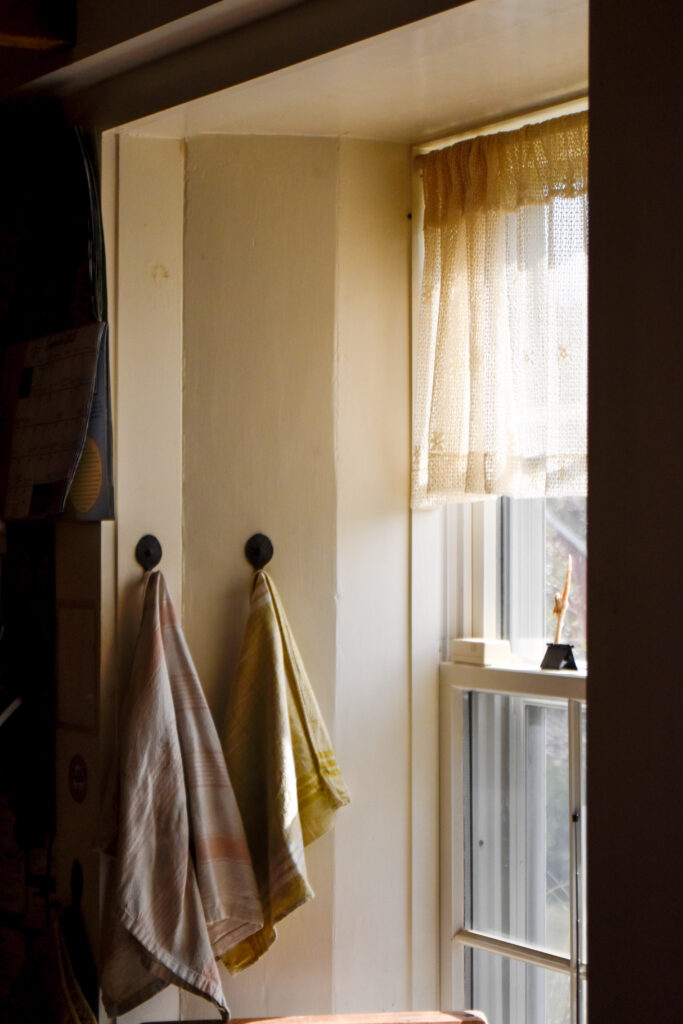
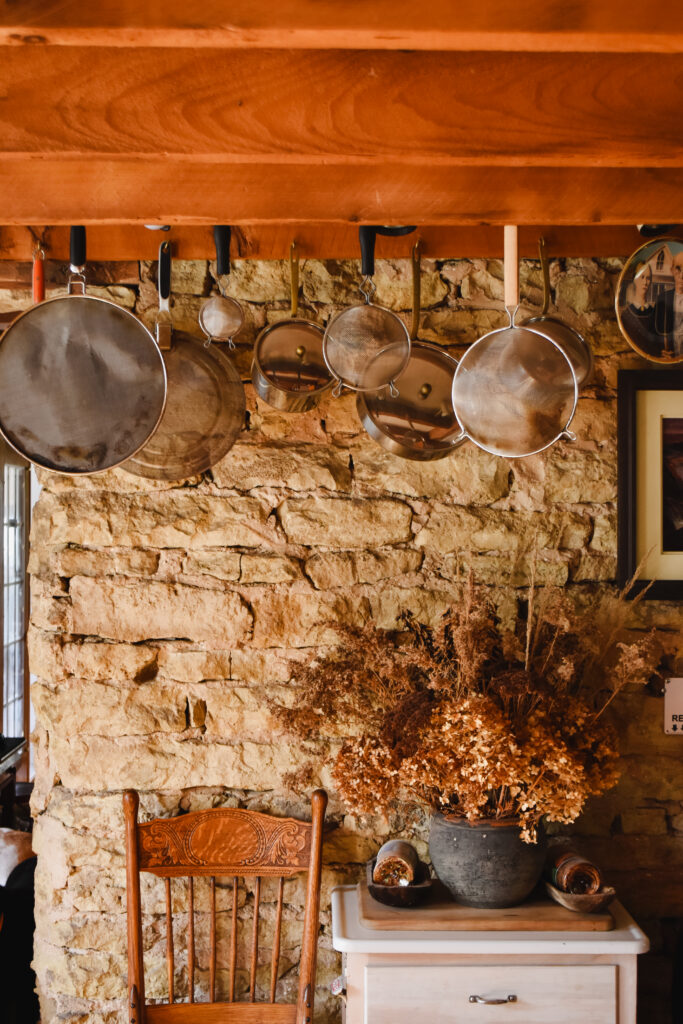
Fast forward to the present day, and down a narrow and winding road, light shines into an 1800s Norwegian farmhouse, illuminating a black and blue stained-glass cow hanging from the window. It’s a warm September afternoon, and nothing but the sound of birds and the excitement of two barking dogs can be heard for miles. Delicate, white lace curtains fall from two kitchen windows, framing the farm views beyond. Pots and pans hang from the wood-beam ceiling, and the exposed stone wall creates additional style and visual curiosity.
Outside, geese float in a calm stream, peahens strut among the green grass, and pigeons flutter in and out of the barn, landing strategically on their custom-built perches. The trees sway in the last bit of summer air, showing signs of a new season ahead.
“I’ve spent my life rebranding this place,” says Larson, now the owner of Larson Farm.
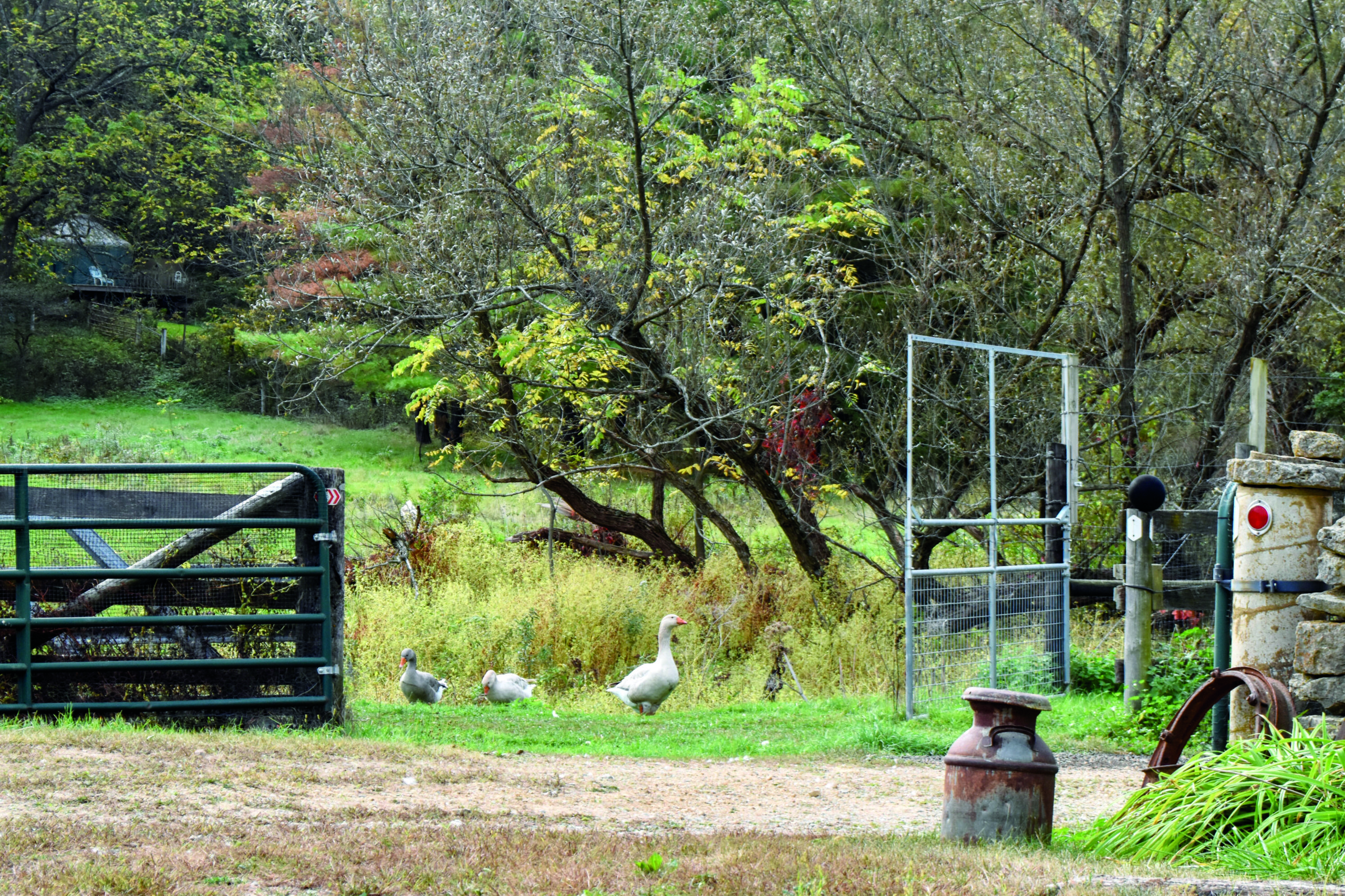
As you drive along the main highways or old country roads, barns like those at Larson Farm paint the vast landscape with structures that speak through time and remind us of the foundations that make Wisconsin Wisconsin.
Norwegians began settling in Wisconsin back in the 1830s, beginning with fewer than 1,000 immigrants. By 1860, around 44,000 Norwegians had immigrated to the United States, according to the Wisconsin Historical Society.
“It is important to restore historic barns. It is necessary to examine our past if we are to see our future. Restoring old barns is one way to restore our history and keep it alive.”
Due to this early settlement, various structures across Wisconsin reflect the immigration of Norwegian families, and they remind us of the decades of hard labor, agricultural progression and care put into sustaining the land for future generations. Over time, however, designs change, technology advances and farms grow — changing how new barns and farm structures are built.
“It’s tough because farm buildings were not built to last 100 years,” says Jason Tish, preservation education coordinator for the Wisconsin State Historic Preservation Office at the Wisconsin Historical Society. “They were expedient utilitarian structures. But they do have … a lot of culture and heritage in them.”
Although many barns throughout the state have been restored, more than half of old barns were lost from 1935 to 2008, according to Jerry Apps in his 2010 book “Barns of Wisconsin.”
“It is important to restore historic barns,” Jerry Apps wrote in an email. “It is necessary to examine our past if we are to see our future. Restoring old barns is one way to restore our history and keep it alive.”
The settlement of Larson Farm
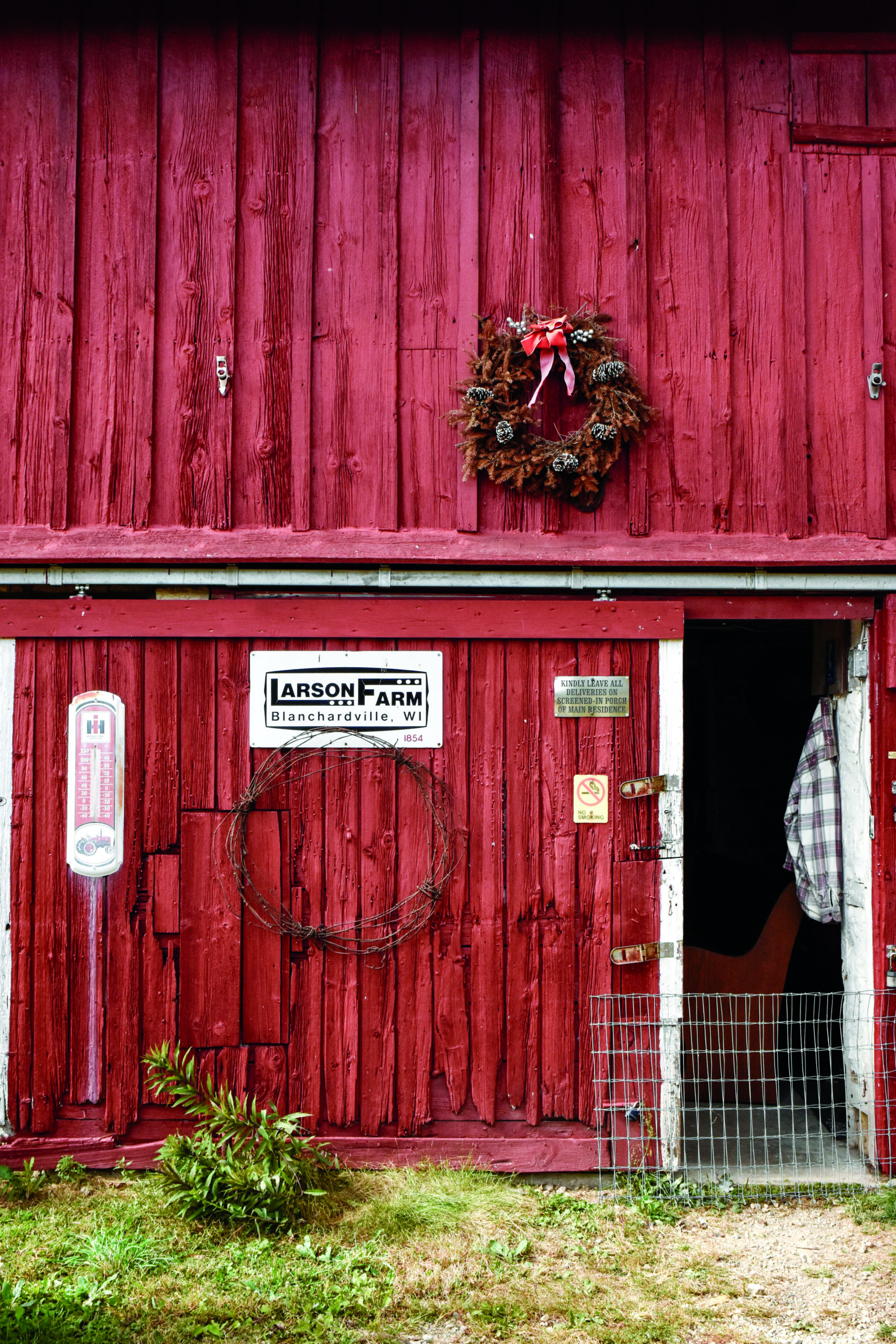
Larson Farm was originally settled in 1854 by Norwegian immigrants Knut and Gunhild Syse and covers around 200 acres of land in Blanchardville, 45 minutes southwest of Madison.
“It was a true pioneer life that Knut Syse and his family lived,” Alexius Baas wrote in a 1949 Capital Times article. “Their first home was partly cave, partly sod hut … But before very long a log house took the place of the cave-sod hut. In the due course of time the log house was replaced by a comfortable farm home.”
For Larson, the remains of the cave-sod hut had always been a mystery.
“Never found it, never found it, never found it,” Larson says. “And then last year, [I] finally cleared a section just north of the current house and found what looked like a half-round [formation] dug into the hillside and some of the local sandstone.”
Knowing how uncommon abandoned red sandstone was, Larson examined further and found that red sandstone has one purpose: fire exposure — meaning that the stone must have been the original fireplace of the Syses’ sod dugout. Following this discovery, he hired a metal detector who found a gold cuff link among the stones, further clarifying that this stone structure was the original site of the Syse sod dugout.
The farm that began as a single sod dugout on the hillside now houses multiple structures, including an 1850s Norwegian-style barn that showcases the land’s agricultural and familial evolution.
In the 1920s, the barn was reconfigured to stack the cows lengthwise, install barn cleaners and recreate the initials of former owner Anton Knudson on the eastern doorway alongside the date 1927.
Like Baas wrote in 1949, the “comfortable farmhome” that replaced the log cabin still stands today, and remnants of the old wood are still present among the stone foundation.
The Larson family
When Larson was around 15 years old, his parents — Gerald and Barbara Larson — were searching for a summer home outside of Madison. After stumbling upon the now Larson Farm, they bought the property in December 1975. From 1977 to 1985, Larson Farm served as a country summer home for the Larson family before becoming their primary residence in 1986.
The decision to move to Blanchardville, however, called for renovation and expansion to the farmhouse and barn. The family wanted to preserve as much of the original Norwegian structure as they could — even uncovering original stonework and floor beams during their work on the property. To make the residence more permanent, they replaced the summer kitchen to the left west of the house with a new family room, a primary bedroom upstairs and an apartment downstairs.
Shortly after, they installed new plank flooring to replace rotten wood on the upper level of the milk barn, replaced the dirt floor in the milking parlor with concrete and installed new asphalt on the roof.
Following a career working in the Peace Corps, the United Nations and as senior LGBT coordinator for the Obama administration, Todd Larson found his way back to Larson Farm and became the primary owner in 2006.
“So, I was like, ‘Well, I’m not going to let [my parents] sell outside of the family,’” Larson says. “‘So I’ll spend the money that I was saving for an apartment in Paris, and I’ll buy the farm.’”
Since then, Larson has continued the upkeep of the land and buildings along with adding a log cabin, yurt and mobile livestock shelters to the property. The barn now serves as a greenhouse, workshop, dog kennel, root cellar and more, all under the same roof.
This past year, Larson upgraded his father’s asphalt barn roof to a metal roof, something he always dreamed of doing when he was younger.
“This is a forever roof,” Larson says. “I’m really quite proud of it.”
Starting with Gerald Larson, the family has worked on prairie and oak savanna restoration across the property, something Todd Larson continues to work on today. Over the years, the family collected old files and stories from descendants of prior owners, and just before his father passed away, Larson published the entire farm’s history.
“He’s lying in a hospital bed,” Larson says. “He’s supposed to be depressed cause he knows he’s on the verge of death, grinning from ear to ear, reading the history.”
Norwegians across Wisconsin
Norwegian barn architecture and heritage can be found consistently throughout the state of Wisconsin. In Baraboo, an hour north of Madison, Myklebust Farm transformed its gothic barn into an event space in 2014 — now known as Vennebu Hill.
The barn that once housed the country’s prized herd of black angus cattle now hosts weddings and barn dances, giving a new life to the old utilitarian structure.
“A beautiful barn that has been redone is a very comfortable living structure,” says Anna Maria Myklebust, co-owner of Vennebu Hill. “If it’s done in the right way … it can be used by people for moments of celebration and joy.”
Myklebust recounts memories of feeding the cattle at 6 a.m., playing in the hayloft and meditating on the hillside as a kid. But after inheriting the farm from her parents, Myklebust knew it couldn’t continue as it was. So she set to work on the barn, taking it down piece by piece, replacing the exoskeleton and adding new flooring to the top floor.
“The thing that I feel is important is if you are going to save the barn, you have to repurpose it,” Myklebust says. “Because otherwise it is hard to maintain the cost. It’s not inexpensive to take down a barn and bring it back up, but make it stronger.”
Restoring old structures is no easy task. But for the Larson and Myklebust properties, among many more, their preservation holds onto the state’s rich history — reminding us all of the generations that came before us and how they can inspire our future.
“This place is everything to me,” Larson says. “Always has been, always will be.”
Norwegian Echoes
Norskedalen reconstructs 1890s Norwegian architecture to bring historic farmsteads to life
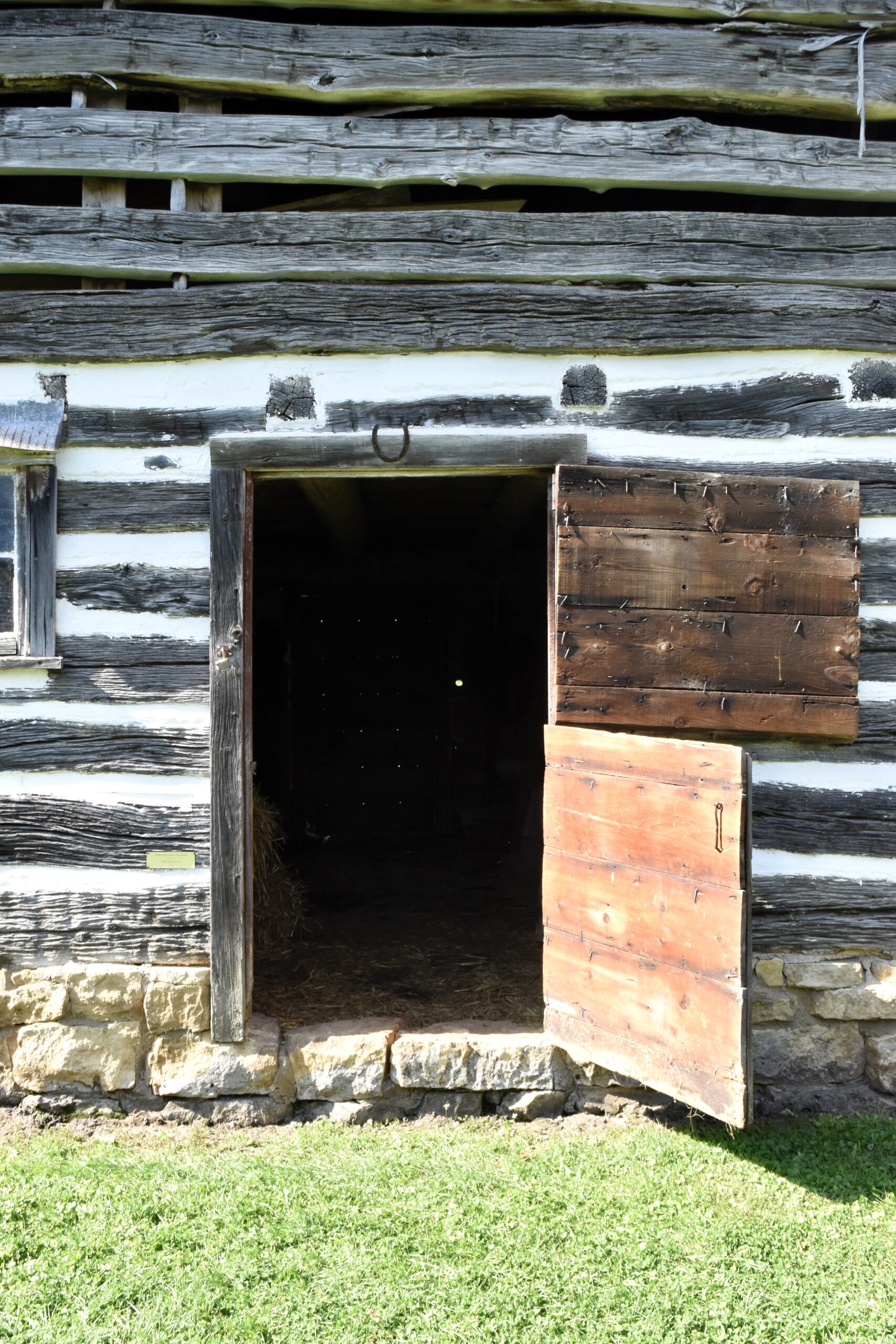
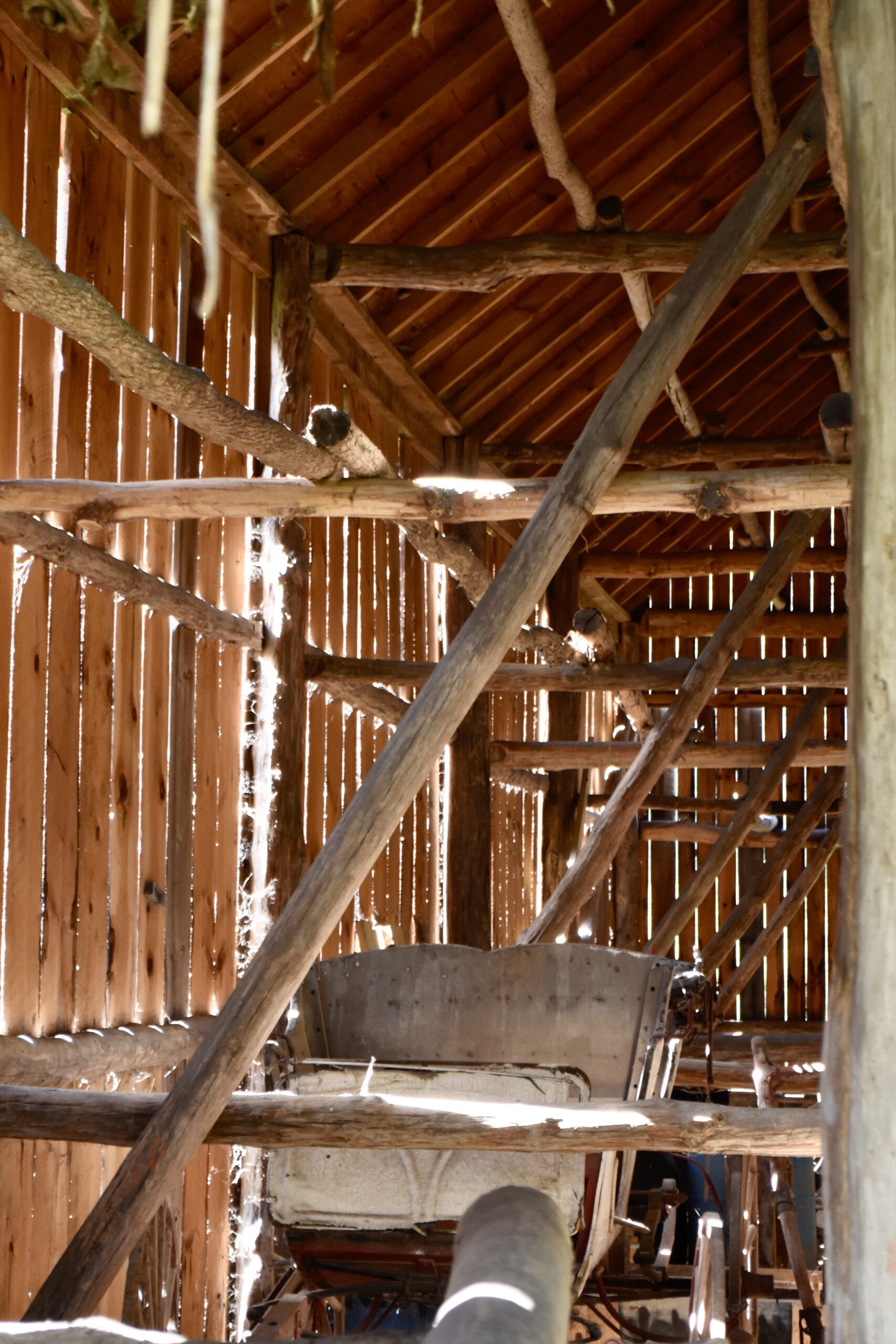
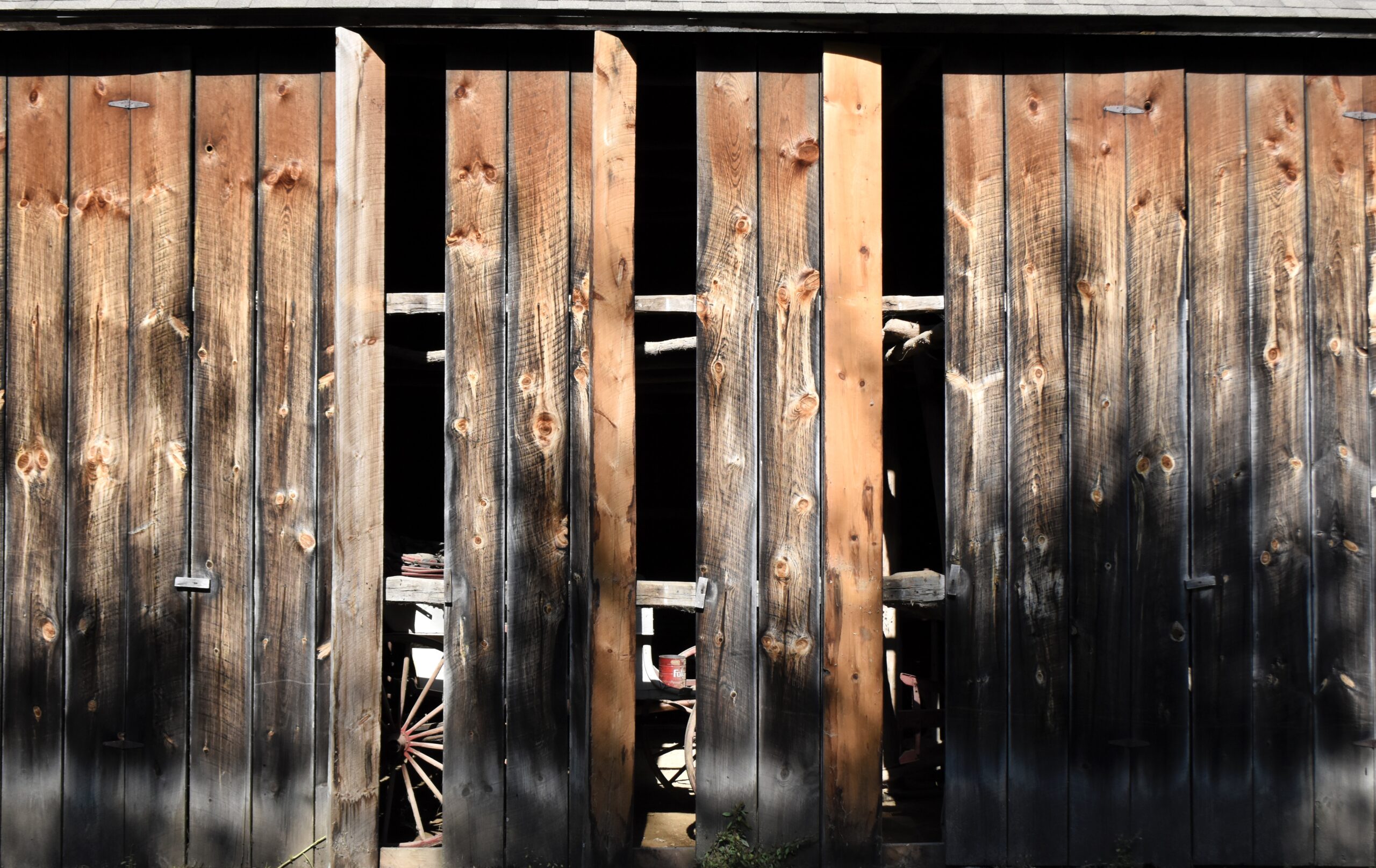
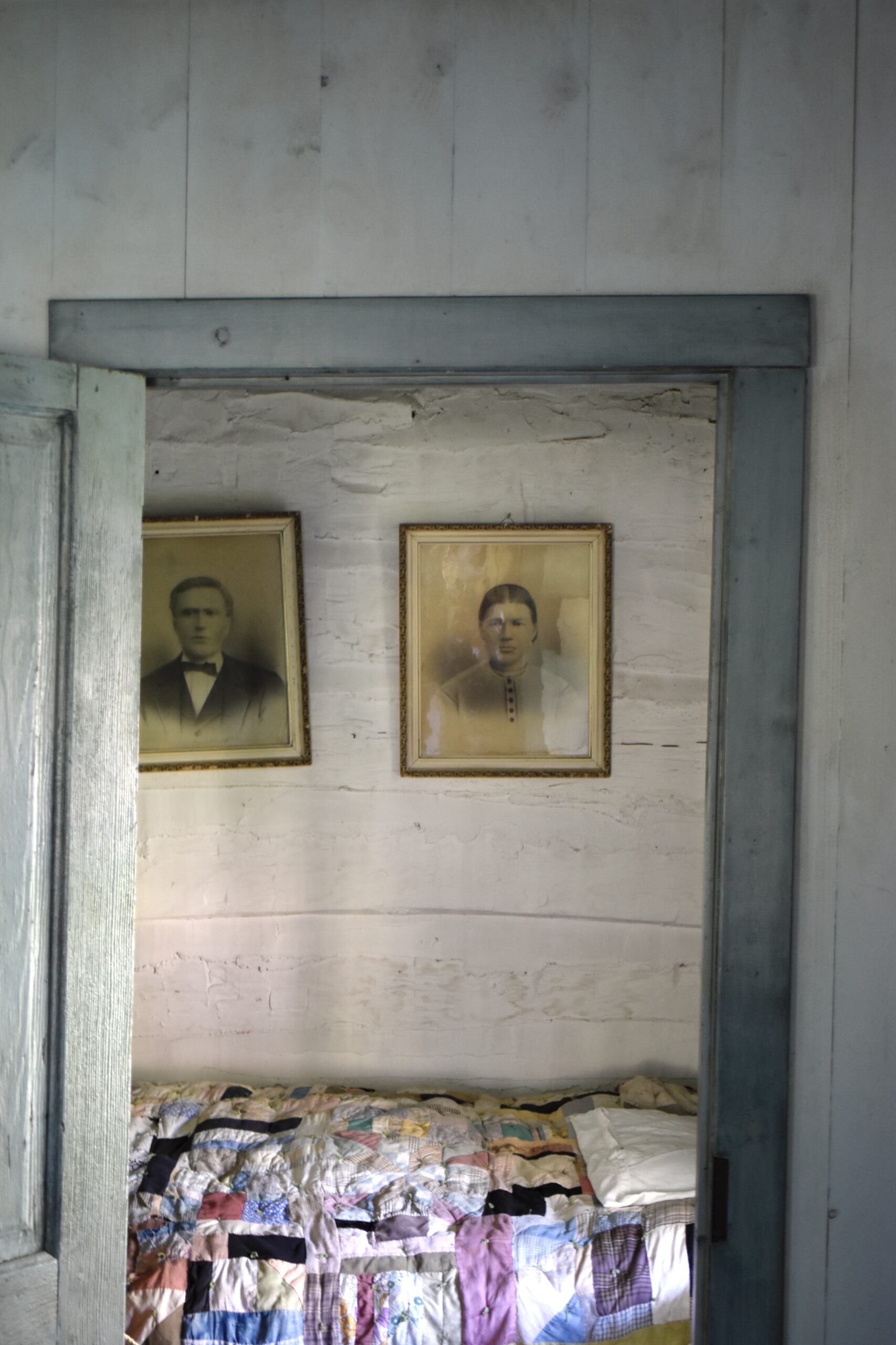
Norskedalen Nature and Heritage Center in Coon Valley is home to a collection of Norwegian structures collected to reimagine a typical southwestern Wisconsin farmstead from around the 1890s. Each structure was gathered from neighboring farms starting in 1982. Although they represent simple and functional forms, each building exhibits historical technology that is quite fascinating upon further explanation. The architecture photographed below is foundational to the settlement of Wisconsin, helping one visualize the livelihoods of those who came before us. The photos are captured from the center’s main campus, Bekkum Homestead, and its second location, Norskedalen’s Thrunegaarden.
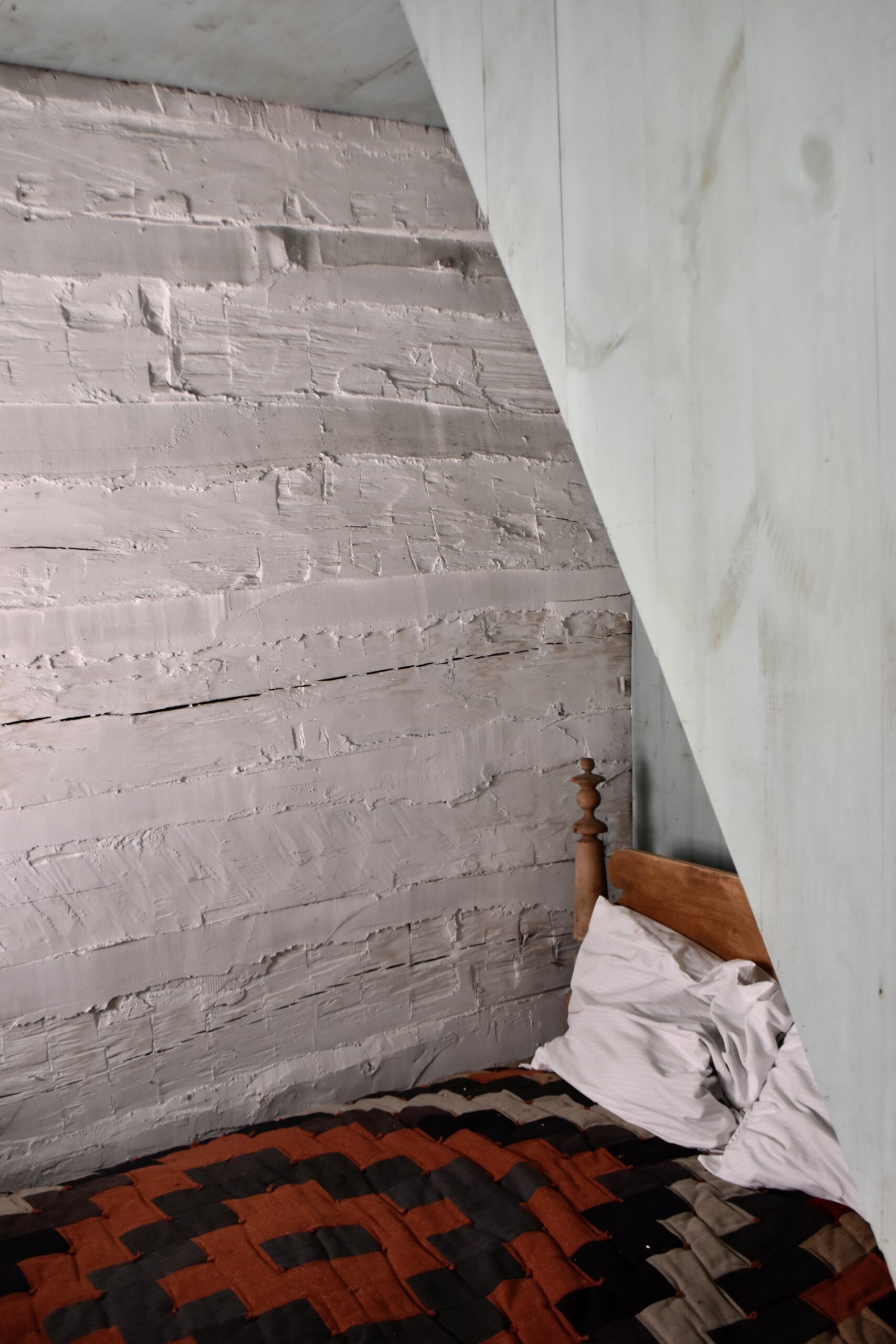

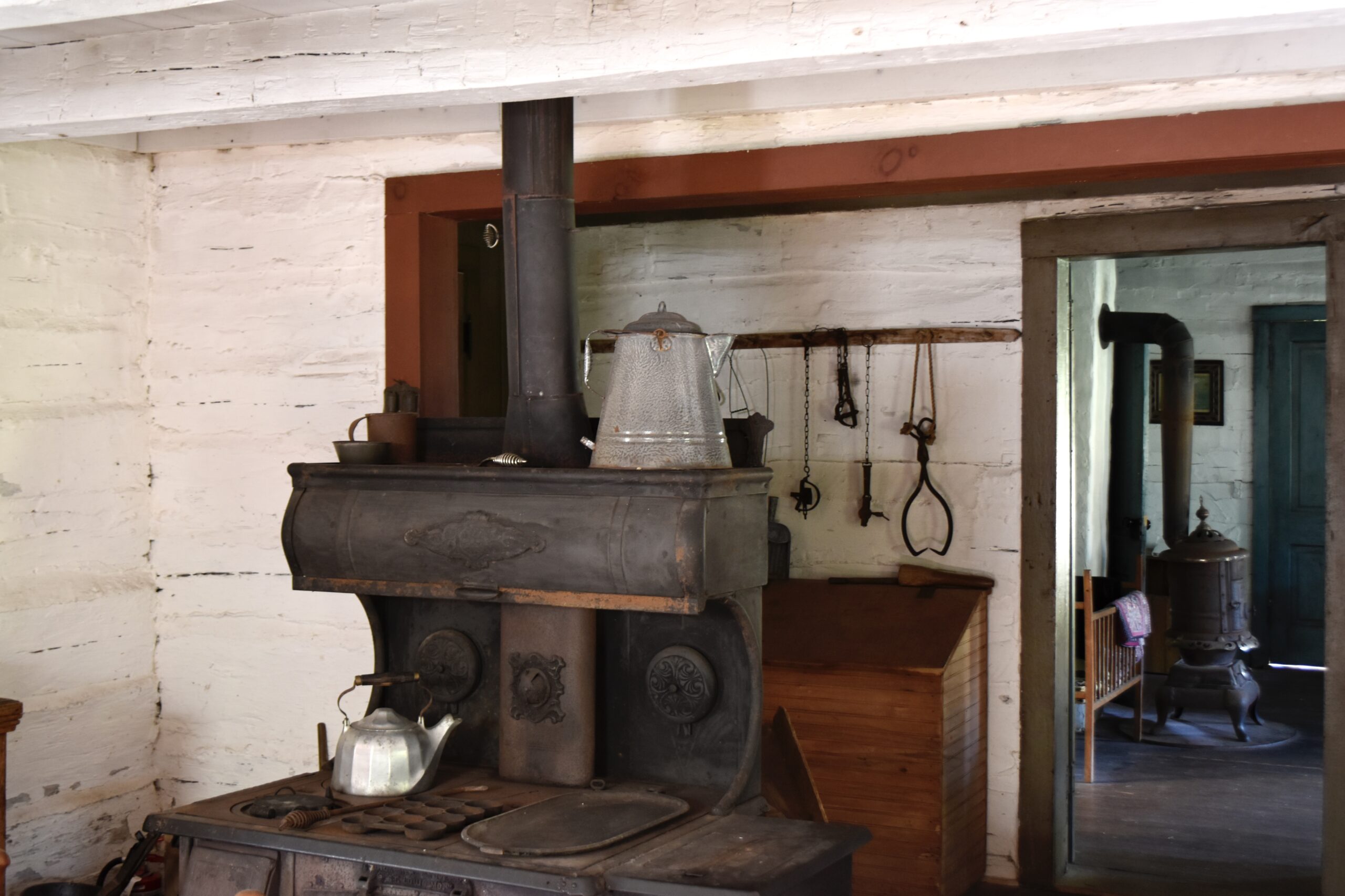
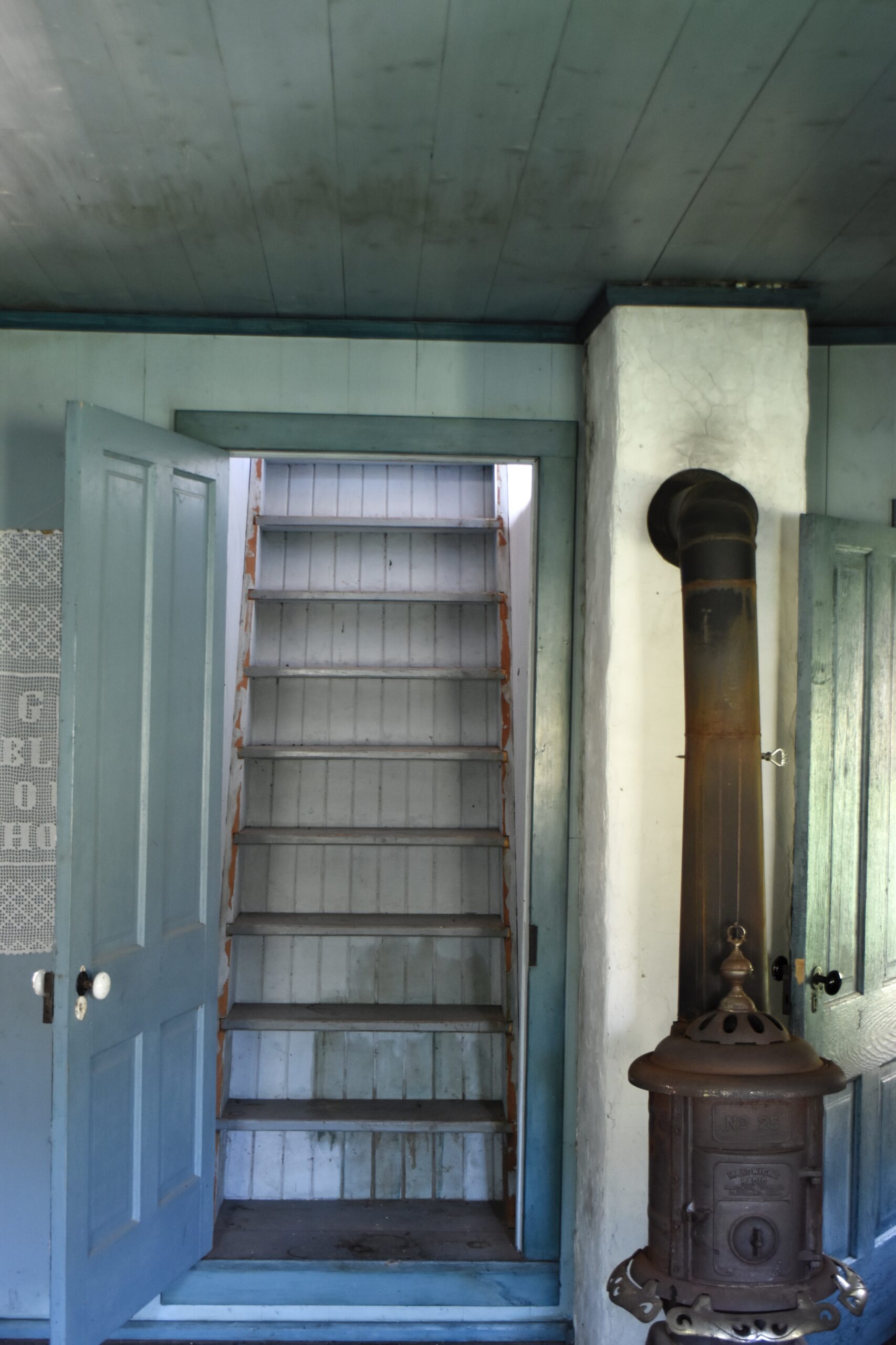
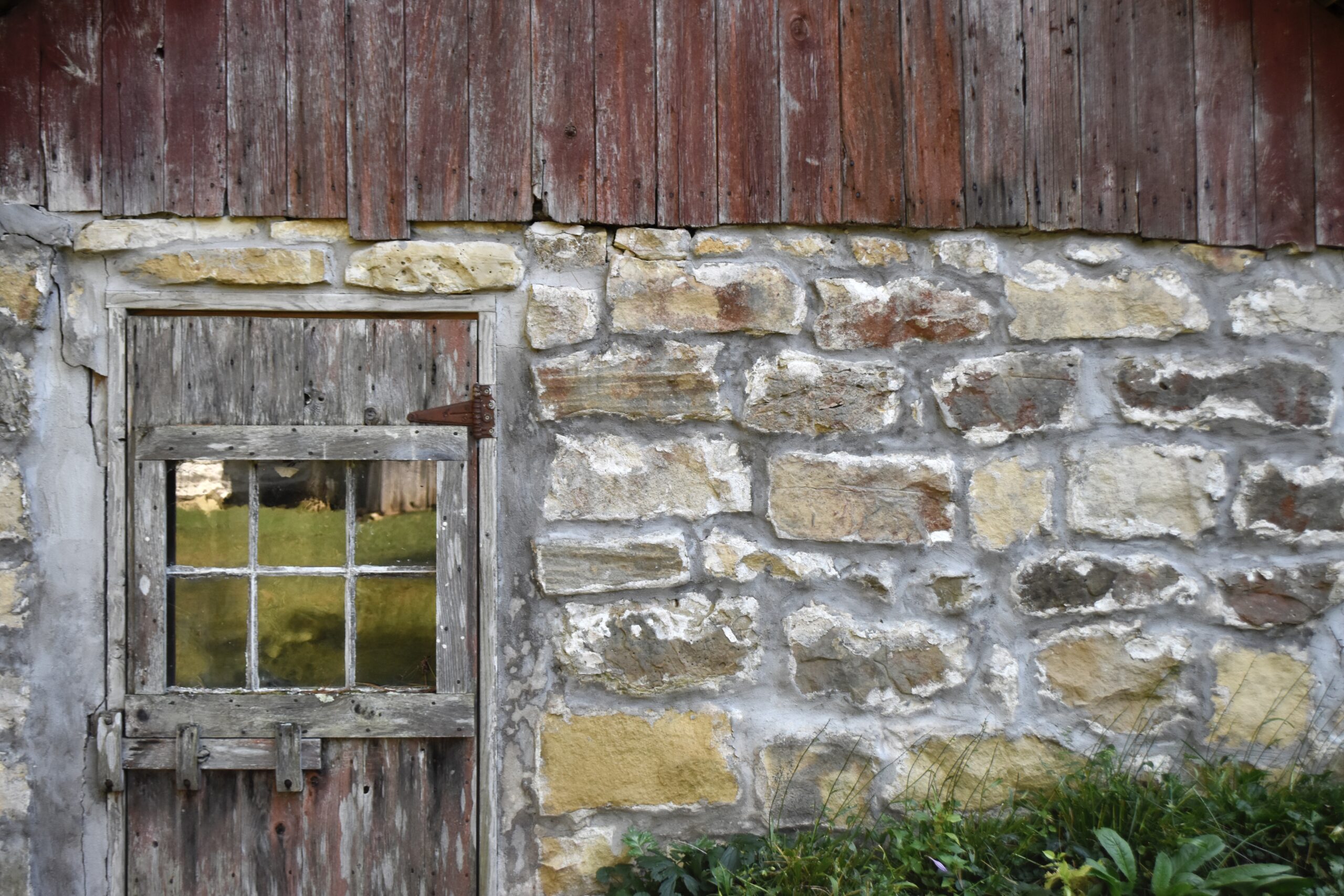
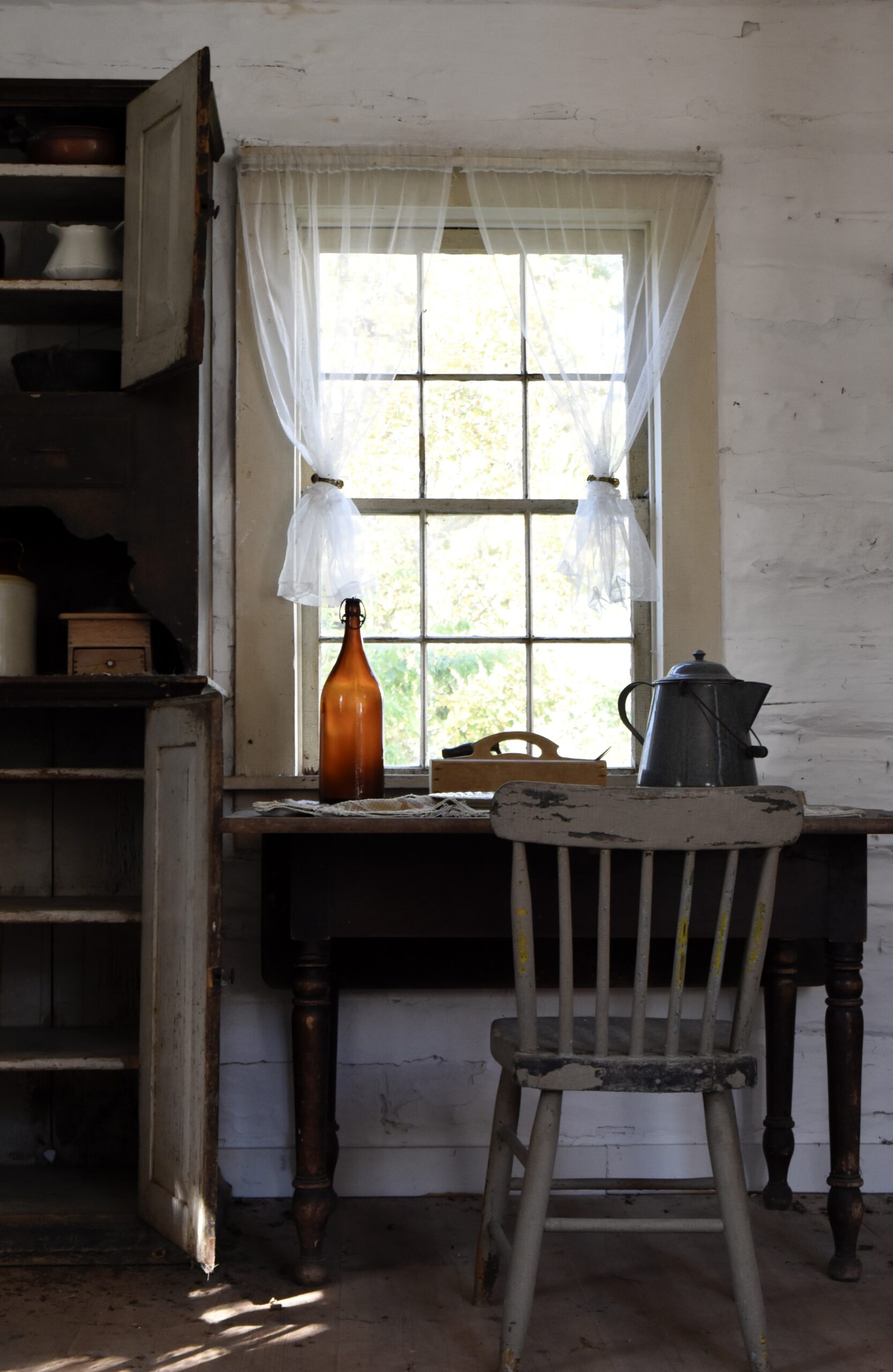
Photos by Lenah Helmke
Feature photo: This bedroom, once used by Larson’s sisters and now as a guest room, serves as a reminder that this farm is not just land, it is home. Photo by Lenah Helmke